

Backroom(s) deals
Issue 58: On believers, blue tape and the safest bet in Hollywood
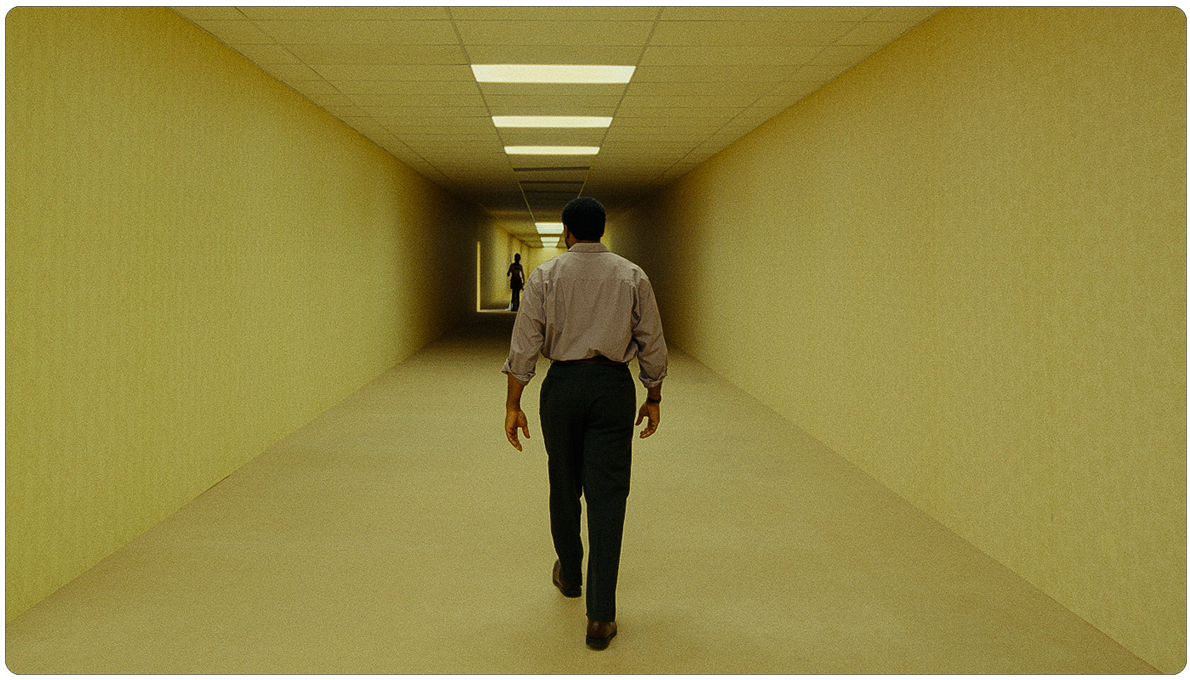
When we sat down to plan this issue, Neil asked the obvious question we figure a lot of people are asking about Backrooms: a movie with a $US10 million budget just out-opened Avatar, so how did they flog it? The question assumes the movie came out of nowhere, which for a lot of people appears to be the case. But it came out of somewhere extremely specific, and the selling started seven years before this thing roared into cinemas and mainstream culture.
The scoreboard, briefly: $US118 million worldwide in its opening week, the biggest original-horror debut in history, directed by a 20-year-old who couldn’t legally drink at his own premiere, and A24’s highest-grossing film full stop. One spot down sat Curry Barker’s Obsession, now Focus Features’ biggest film ever. And below them both: The Mandalorian and Grogu, a $US165 million Star Wars film dropping into third place behind two YouTubers whose combined budgets wouldn’t cover Grogu’s ears.
We’d call that a preference being expressed, and while wunderkind profiles are being written left right and centre, we would like to direct your attention toward what Backrooms’ opening week did to the industry’s definition of a safe bet. (The movie’s worldwide haul is now nudging $US300 million.)
Hollywood’s risk equation has remained reasonably stagnant for 20 years: originality is a gamble and pre-awareness is insurance. This is how you justify spending $US165 million on yet another movie based on a property that has been loved, sequelled, spun off and merchandised for half a century. On paper, Backrooms is the same wager: it’s still adapted IP with a built-in audience. The difference is where the IP was sourced: a live community still adding to the canon the weekend the film opened.
This has asserted its dominance as a safer investment at a fraction of the price, because by the time A24 committed to anything, the property had been concept-testing itself on the internet for years.
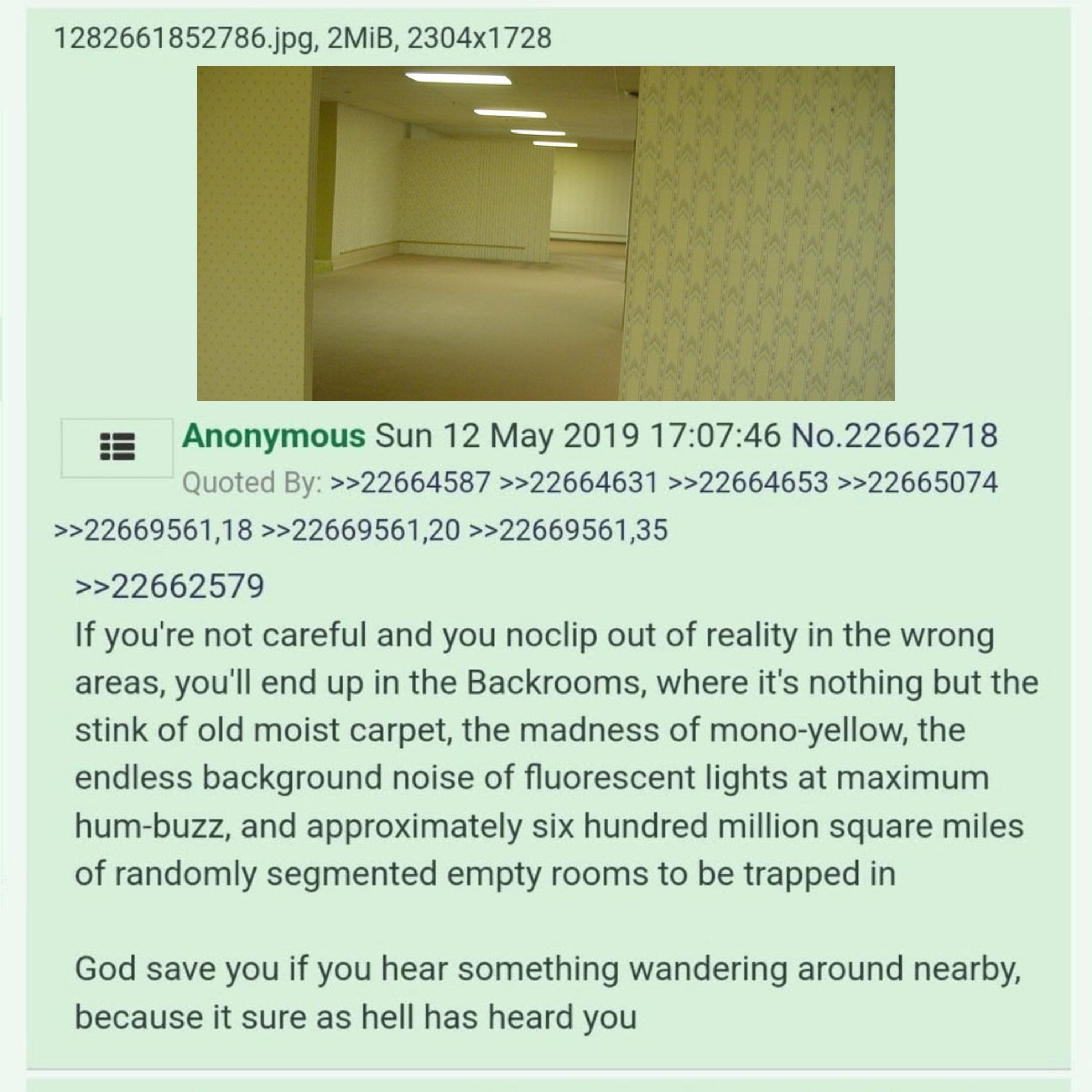
It helps that the founding text was built to spread. The whole canon of the Backrooms descends from one stolen-looking photo and an anonymous caption shorter than most brand purpose statements. It gives a setting, a way in (you “noclip out of bounds in reality”, gamer shorthand for falling through the world’s geometry), a complete sensory palette and a threat it declines to describe, then stops. Everything a screenwriting manual would call as missing gave the original Backrooms creepypasta its legs. This is the sort of lore-building 4chan flocks to. Thousands did, and one of them was a 16-year-old with a month of spare time in Blender. Organisations have a shocking tendency to smooth every ambiguity out of their messaging and wonder why nobody repeats it: a message you can add to is a message you will pass on.
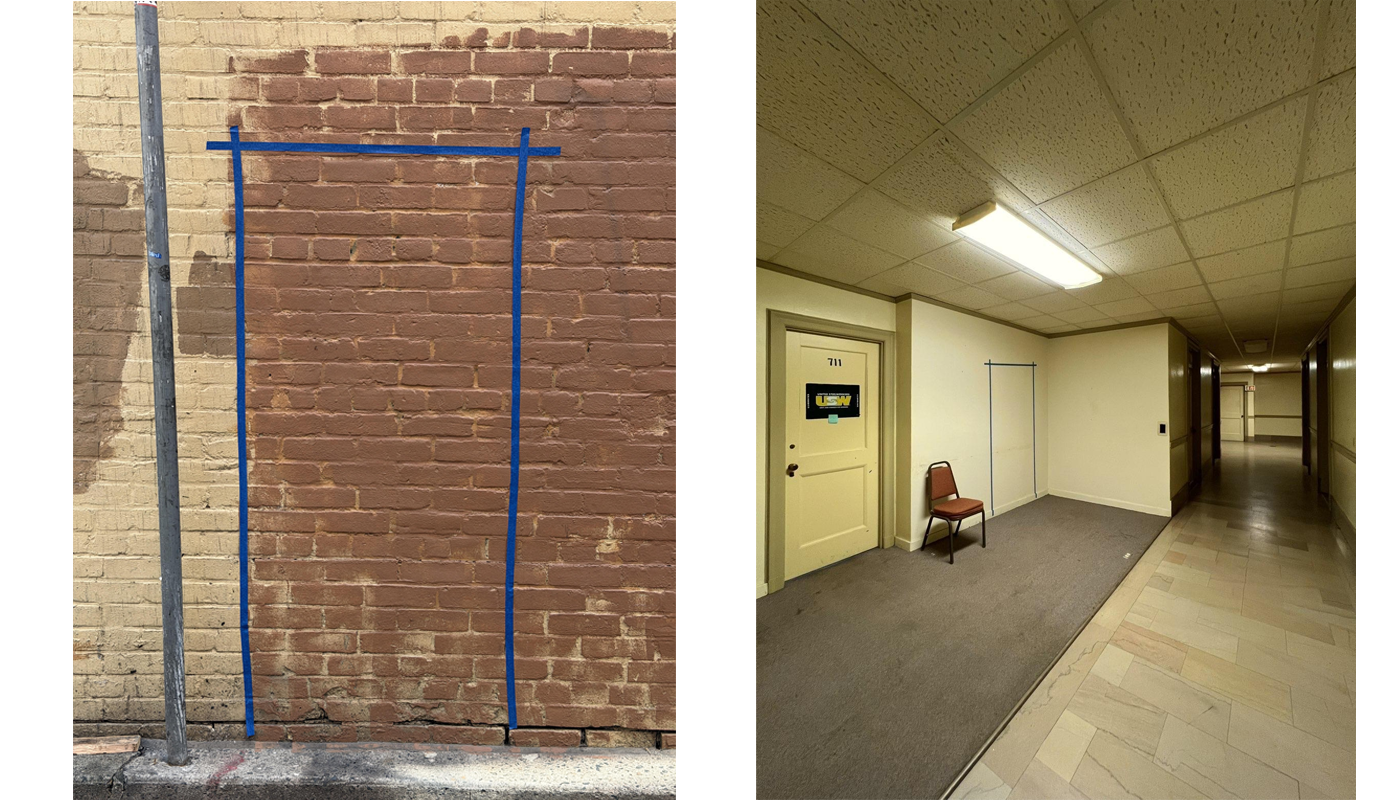
What A24 did with all this was mostly a matter of restraint. The February 2023 announcement with Kane Parsons, the teenager who built the lore’s most-watched corner, holding the camera pre-empted the ritual backlash that greets every studio raid on a fandom. It turned three years of production into three years of coverage on a media spend of zero. The paid work, when it finally came, was apt: blue-taped doorways in subway stations with no title and no date, performers in Async hazmat suits taping off the real-world location Parsons recreated in his first upload, a fake ad for “Cap’n Clark’s Ottoman Empire” with a small A24 logo in the corner. ARGNet, dormant since the alternate-reality-game heyday it was built to chronicle, came back from the dead to cover it. None of it explained anything to outsiders. The initiated did the explaining for free, in their own words, to audiences who trust them more than they would ever trust a trailer.
Dr Marcus Collins ran digital strategy for Beyoncé, built her a handsome official fan community, and proceeded to watch his Beyentourage sit nearly empty while the Beyhive organised itself elsewhere using its own language, rituals and enforcement arm. The conclusion Collins reached, and later built For the Culture around: “We were looking for fans when we should have been looking for believers.” You can’t build the hive and you can’t buy it. You can only find it, feed it and stay out of its way, which is a near-exact description of the Backrooms campaign. A24 bought a house of collectively built canon with thousands of contributors and resisted the urge to renovate it.
Sony’s Slender Man, in its glorious ineptitude, actually proves this point better than the good example above. The studio licensed a wildly popular creepypasta monster and still scored a 7%-on-Rotten-Tomatoes film. How? They treated it as buying a name versus buying the right to talk to the community that made that name famous.
Long-time readers can file this as a kick-on from our Heartbreak High issue, where the lesson was that inside jokes work as invitations and you don’t water down identity to court a wider audience. Heartbreak High did it with shoeys and menty Bs; Backrooms does it with blue tape and hum-buzz. In both cases, the niche did the work, but maybe more importantly, the people who didn’t get the references followed the people who did. It’s just like high school really. If you heard the cool older kids talking about something you hadn’t heard of, you wouldn’t bail them up and ask about it, you’d run home to your computer to learn everything you can before dropping a casual ref at lunch the next day to signal you’re cool too and that you’ve always been cool.
The timing of all this is no accident either: horror booms when economies wobble. Psychologists call it benign masochism: paying to rehearse dread in a room with exits. This particular dread is an infinite beige office that Gen Z finance TikTok has spent years interpreting as capitalist alienation. Severance is a solid example of the same aesthetic, albeit written for a different audience.
None of this is original. Backrooms is an adaptation of a photograph of a hobby store in Oshkosh, Wisconsin, and yet it is also the freshest thing in cinemas. Originality was never really the variable, sourcing is. In the 1970s, Fox grudgingly spent about $US11 million on a space western a young director had stitched together from Kurosawa, Flash Gordon serials and old dogfight footage, and the studio had so little faith in it that it let him keep the merchandising. The fans did a real number on that one (yes, we’re talking about Star Wars). The archive Disney now routinely reheats began as the cheap, weird, borrowed thing that a community fell in love with and carried. Kind of like tacos al pastor. We’re hungry.
Give it half a century and someone will pay millions of dollars to reheat the Backrooms too, but the conversation will have moved to a different corner of the internet (or whatever we’re using then). That’s where you’ll find a better investment every time.
What we’re currently obsessed with
Andrew
This build on W. David Marx’s Blank Space from Adam Mastroianni. I finished the original last month and while it was a fun romp through a particular strain of nostalgic US cultural history, I was a little disappointed by it being riddled with AI truisms and making the same sort of points Brad Troemel, Joshua Citarella and even this Substack have made before. This is coming from a big fan of Marx too. Mastroianni has managed to fill what I’m now realising was the – oh God, I’m gonna say it – blank space that Marx left in his own work: a real, working sociological theory backed by research as to the broader patterns that allowed something like poptimism to occur in the first place.
I promise you’ll see it referenced at least four times in future COMMPRESS issues.
Neil
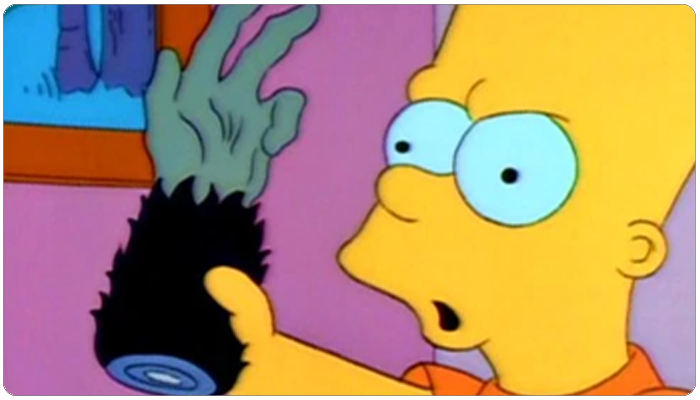
I haven’t seen Obsession yet, but I have become obsessed with something I learnt from a Rolling Stone article. Curry Barker was inspired by a segment in a 1991 episode of The Simpsons that played on W.W. Jacobs’ 1902 short story about a severed simian hand with supernatural powers (the episode was Treehouse of Horror II, but we all knew that, right?). The short story has inspired plays, multiple films, TV shows, even an opera, proving – once again – that there are only seven story plotlines in the world and everything is a variation on one of them. Don’t believe me? Read Christopher Booker’s The Seven Basic Plots: Why We Tell Stories. OK, I’ll save you some time. The plots are Overcoming The Monster, Rags To Riches, The Quest, Voyage And Return, Comedy, Tragedy and Rebirth.
Eliza
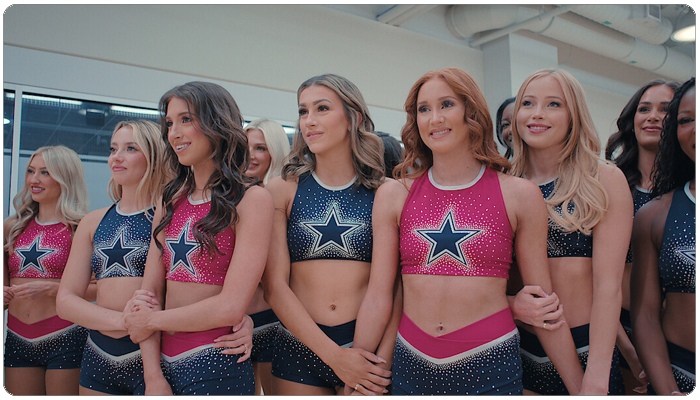
Season 3 of America's Sweethearts: Dallas Cowboys Cheerleaders landed on Netflix this month, and I spent this past weekend immersed in Texas, glitz and glam. But this season's real subject isn't choreography, it's the cost of global fame for the women performing it. Veteran Reece says it plainly, “As much positivity as I receive, there's also loads of negativity”, a reality that led the fan favourite into retirement two years earlier than expected. The series has confronted online hate before, including a stalker tracking a teammate’s car with an AirTag. Now, as Netflix expands the team’s visibility, recruiters are looking further afield, even finding Perth local Faith for a rookie season. Social media is a great tool to build visibility and community, but its impact cuts both ways. I’ve been hearing the term “parasocialism” more often: the one-sided closeness audiences feel with people they have never met. Having a following does not create clear boundaries between admiration and intrusion. Audience growth and duty of care should not be planned separately. Social media is here to stay, so safety needs to be built into the business strategy from the beginning.
Tess
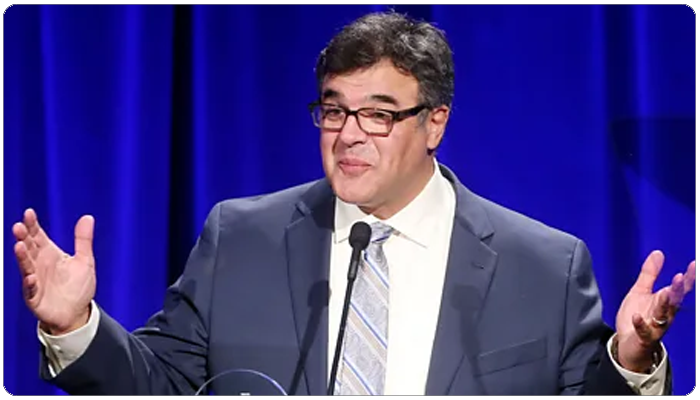
My obsession this week: I’ve somehow landed on the side of TikTok that’s obsessed with John Kiriakou, the disgraced former CIA officer. Kiriakou was sentenced to 30 months in prison in 2013 after pleading guilty to disclosing the identity of a covert CIA officer. Many, however, believe he was really punished for blowing the whistle on America’s torture program. These days, he seems to move from podcast to podcast (and makes a fortune on Cameo), but he is a fantastic storyteller. Yes, the stories themselves from his days in the CIA are fascinating, but it’s the way he tells them. He gives just the right amount of detail and, for me, tells the story at the right speed.
From a communications perspective, it’s an interesting case study. Plenty of people think he’s a fraud and that some of his stories are exaggerated or outright fabricated. But whether they’re true or not, there seems to be one point of agreement: he’s an exceptional storyteller and a reminder that, in the battle for attention, how you tell a story can sometimes matter as much as the story itself.
Sam
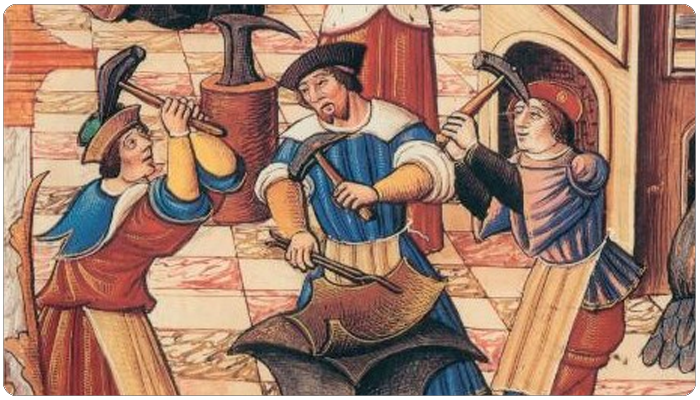
Guilds. At a drinks on Sunday, a friend made the comment that “there just aren’t enough guilds anymore” and I can’t help but think that they’re right. What happened to all the guilds? You’ve got the Screen Actors Guild in the US, sure (although last year it rebranded the SAG Awards as the Actor Awards Presented by SAG-AFTRA). The Writers Guild of America had that massive strike in 2023 that shut down Hollywood. The Elder Scrolls games have the Fighters and Mages Guilds… but beyond that?? Seems like a missed opportunity for someone with prowess and means to start one of their own. I’ll join you. Anyway, I’m now deep in a rabbit hole reading about medieval guild halls and trade monopolies in 14th-century Florence.