

Internal affairs
Issue 37: Leaked emails. Corporate jargon. Reluctant CEOs. Welcome to the wild world of internal comms and how to do it better.


Two different companies. Two different industries. One thing in common: a failure to understand the basic principles of good internal communication.
When ANZ inadvertently announced 3,500 job cuts plus 1,000 contractor terminations and when Paramount declared creative teams “must sit together” we were reminded that the line between internal and external comms dissolved somewhere around 2019. Always remember, every leaked memo can now become front page news.
ANZ and Paramount are smart companies run by smart people, but not always smart enough to know that some of the biggest external communications disasters start as internal communications blunders.
Your staff wake up every morning with fully charged phones and finely tuned bullshit detectors. They’ve got LinkedIn profiles, X accounts and group chats where carefully crafted messages get dissected faster than you can say “all-hands meeting”. It’s one of the first rules of comms and a rule that CEOs sometimes struggle to believe when they are told it’s 100% true: every piece of internal comms can find its way into the hands of an unfriendly, click-bait-focused journalist.
If we had a dollar for every time a CEO or CFO or CMO rolled their eyes when we told them their highly sensitive, “for staff’s eyes only” email would be leaked in a heartbeat, well, we wouldn’t be scratchin’ around writing COMMPRESS.
Alas, here we are. Giving you some damn good advice on how to spark smarter conversations with arguably your most important audience: your team. And we’re doing it for free it seems.
Act
It’s not a smart conversation if there’s nothing to talk about.
Start with the right strategy and execution to prove you can walk the talk.
The most sophisticated internal communications strategies operate on a simple premise: your employees are your first and most credible audience. Get them onside, keep them onside and they become your most powerful advocates. Get your internal comms wrong and they become your most dangerous critics – something ANZ is going to learn the hard way as its ham-fisted job cuts roll out.
To be fair, ANZ chief executive Nuno Matos did say it was “indefensible and deeply disappointing” for staff to have been told they were being made redundant by automated emails that went out too early and insisted that the bank was taking steps to ensure no repetitions. But at a time when ANZ is heading into a period of massive disruption, the damage is already done. We have all sent emails to the wrong people. When it happens, the trick is what you do next. Throwing yourself on a sword is often the best approach. But Matos and his now-rattled comms people need to do a hell of a lot more than sending a couple of apologetic all-staff emails.
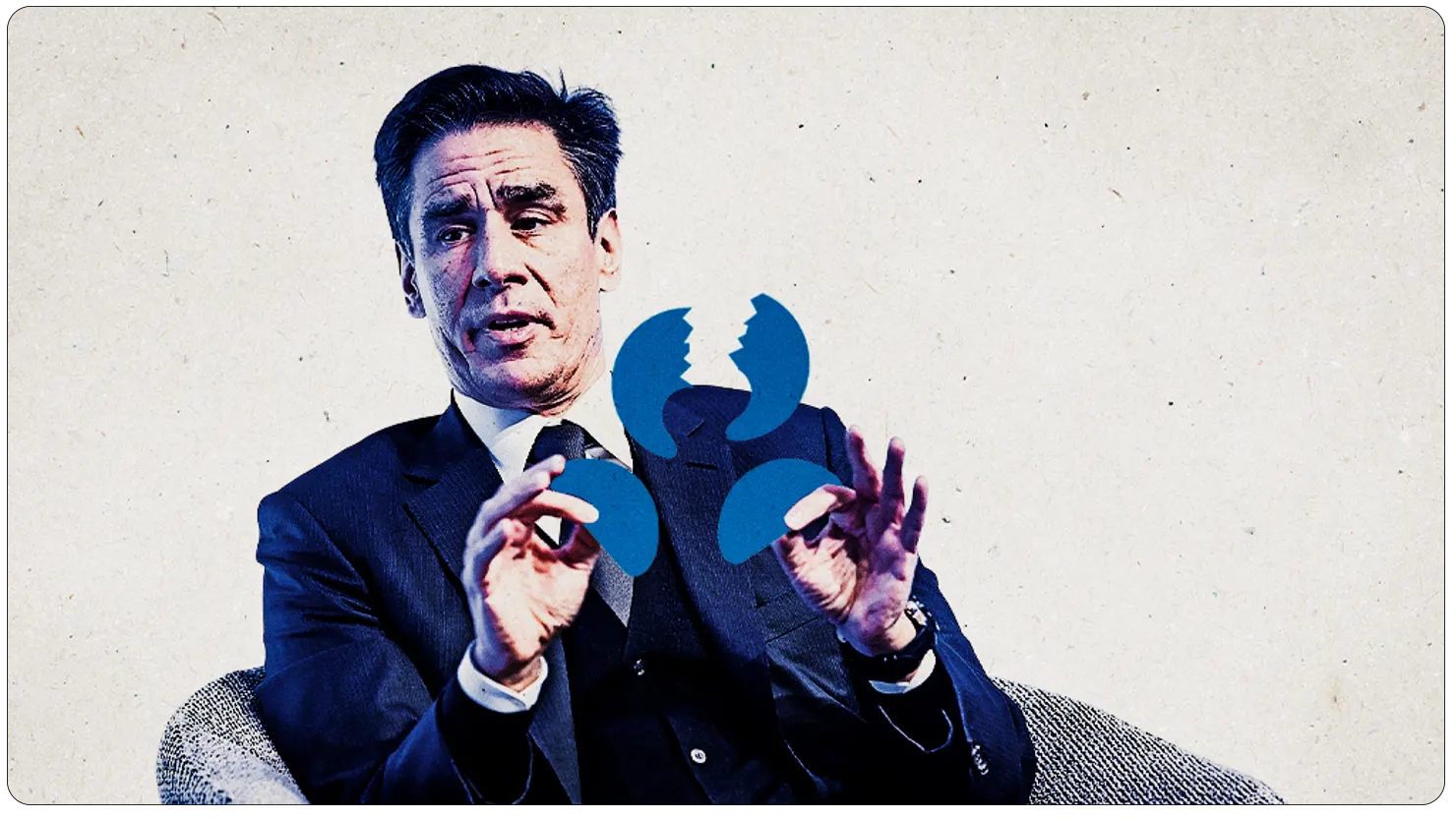
Trust takes a long time to build, can disappear in the blink of an eye, and takes a long, long time to rebuild.
Paramount’s recent declaration that creative teams must work in the office five days a week provides a perfect case study in how internal messaging can backfire. (Cute that Paramount thinks people in media and entertainment only work five days a week. As one senior Australian media executive told me [Neil] years ago: “It’s not a job, it’s a lifestyle.” My unspoken response? “Well, it’s a shit lifestyle.” The exec in questioning was earning well north of $2 million a year. I was not.)
David Ellison’s statement that you “cannot be in a creative business” with remote workers might have played well in a boardroom, but it landed like a brick with employees already anxious – with good reason – about their job security. The message leaked within hours, generating more negative coverage than positive, largely because it failed to acknowledge his staff’s concerns or provide a compelling reason for the mandate apart from “The boss thinks it’s a good idea, so we’re doing it”.
That wasn’t the only comms blunder in Paramount’s messaging. It also, essentially, told staff that if they couldn’t or didn’t want to be in an office five days, they would be fired. True story. Anyone who has worked with, or for, an American company knows that many use internal comms like a blunt, lethal weapon. But even by those standards, Paramount’s approach was sledgehammer-like. Transparent? Yes. Strategically sensible? No. Humane? Heck no.
Compare Paramount’s approach to how Atlassian has handled its “distributed first” strategy. Rather than mandating office attendance, it invested heavily in explaining why its approach works for its specific business model. The company regularly shares detailed posts about productivity data, employee satisfaction metrics and the deliberate design choices that make remote work effective for software development. It treats internal policy changes as opportunities to demonstrate its values rather than what the bosses want without any real explanation as to why or what will be achieved.
The difference lies in treating employees as real stakeholders, not simply resources or numbers on a spreadsheet. When Virgin Australia faced financial restructuring in 2020, its now former CEO Jayne Hrdlicka took a different approach to other airlines that hit turbulence (sorry, it was right there). Instead of hiding bad news or sugar-coating difficult decisions, she sent out regular video updates for staff explaining exactly what was happening, why decisions were being made and how employees could contribute to solutions. Staff became partners in the changes rather than passive recipients of management decisions.

Hrdlicka, of course, had a big team behind her managing and executing the internal comms. But history shows that if a CEO doesn’t embrace internal comms, it will fail. We’ve all known way too many CEOs and company directors who regard internal comms as a burden. It isn’t. It’s a vital part of managing staff and building a brand, internally and externally.
Smart organisations recognise that internal communications must speak to three audiences at the same time: current employees, potential recruits and externals who will inevitably see or hear what the company is saying.
The best internal communications strategies create what we call “narrative alignment”, ensuring that what employees experience matches what external audiences hear about the company. When there’s a disconnect between internal reality and external messaging, employees become sceptical brand ambassadors at best, and active critics at worst.
Explain
How big ideas are translated into words that resonate, build identity and set the context for a smart conversation.
The language of internal communications has changed a lot in recent years, as it should. Gone are the days when corporate speak could hide behind vague platitudes about “synergies” and “rightsizing”. Today’s workforce wants transparency, authenticity and straight talking, even if it spooks the horses.
ANZ’s recent communication around job cuts illustrates the challenge and the opportunity. It had to announce big staff cuts while maintaining employee morale and public confidence. It had to show it understood the impact on the people who will leave and keep other staff – plus customers – on side. Not easy. And then it stuffed it up. It wasn’t back at square one; it was back at square negative 312.
Effective internal communications follow what we call the “reality-first” framework: acknowledge the difficult truth, explain the reasoning and provide clear and constant information about what happens next. When Qantas faced its recent cybersecurity breach, CEO Vanessa Hudson’s internal comms followed this pattern. She didn’t minimise the situation or hide away in her office. Instead, she explained what happened, what the company was doing about it and how employees could help customers during a difficult time. And she apologised.
The timing of internal communications has become as important as the content. Way too often, employees learn about company news from external sources before internal ones. This creates a credibility gap that can be a killer (of morale). It seems blindingly obvious, but staff have to be the first to know what’s going on – bad and good – even if things aren’t finalised.
Canva’s approach to internal communications during its rapid growth phase shows this approach in action. As the company expanded globally and hit myriad challenges, co-founder Melanie Perkins made sure she over-communicated with staff. She shared updates as things developed, to keep her people informed about company thinking.

Canva and others understand the power of pre-emptive messaging. They don’t wait for a crisis (or good news, for that matter) to talk to their staff. They talk all the time. So when the shit hits the fan, staff know the context and trust what they are hearing.
It’s right here that too many companies struggle. Their baked-in preference for understated communication (or none) doesn’t translate well to internal comms when things get rough. Employees need more information, not less, and they need it delivered transparently and frequently.
Of course, companies need to avoid over-sharing (no one needs an update from the CEO every day). Good CEOs, comms people and HR people should know what to share, when, how and why. That’s their job. It’s going to vary from company to company, industry to industry, issue to issue. And never under-estimate the power of the quick update. Not every bit of internal comms needs to be an opus. CEOs should rely on their executives, comms people and HR people to feed them info about what’s going on in the business – the wins, the people doing a great job, the challenges, the opportunities – and pick the key ones to spread far and wide.
Amplify
A conversation means someone has to listen and respond. Cleverly amplifying the message to the right audience, at the right time, is the final piece of the puzzle.
Internal communications can go external whether you like it or want it to, or not. The question is whether it happens strategically or by chance or by malice. (Or an employee innocently forwarding an internal email about staff changes to their partner then being genuinely shocked when it was explained to them why that was a very dumb, and job-ending, move.)
Every significant internal communication can eventually leave the building. That matters because staff emails, social media posts, casual conversations and formal statements all contribute to the public perception of how companies treat their employees, which, in turns, feeds into brand perception. While most people have short attention spans, it’s hard to imagine anyone rushing to sign up with ANZ right now, or are we overthinking it?
Rather than trying to prevent leaks, some companies create internal comms they want aired externally. When employees share positive internal messages on social media, it becomes authentic advocacy that money can’t buy. When a CEO sends a company-wide email about strategic direction or success stories like beating sales targets, employees who share them become authentic brand ambassadors rather than people who leak. Well, they are leaking, but it’s good leaking.
Social media has turned every employee into a potential spokesperson, but this doesn’t have to be regarded as a threat. Companies that embrace employee advocacy while providing clear social media guidelines know that it works. But – and it’s a big but – there is no point going down this path unless the communication to staff is honest and as transparent as it can be.

Telstra has created what it calls the “3Rs of Social Media Engagement”, a framework that encourages rather than restricts employee advocacy. The aim of the code is to help its people feel confident when online and to their own “personal digital identity”. It sounds hokey, but it does acknowledge the difference between official corporate messaging and authentic employee voices, with training and support to help employees represent the company positively. The framework extends to Telstra’s broader customer advocacy strategy, which emphasises that involving employees in identifying and implementing changes builds trust and creates a sense of ownership.
Canva treats internal communications as an external marketing channel from the outset. For every major event, it creates a campaign toolkit that includes an internal communications element, including customisable social templates and frames (all made with Canva, of course). Canva’s execs see internal communications as a channel in the same way as channels as email and paid social. It knows that its staff are one of the most powerful ways to amplify company messaging.
There are lots of guides to good internal comms out there, too many in fact. This one from Forbes is a bit basic, but worth checking out. And let’s be honest: many CEOs don’t have time to become internal comms experts. They do, and should, rely on their comms people. If they have good HR people, they can lean on them as well. Not all HR people understand how to talk to people effectively and without jargon, so if you find some who does, cling to them.
Employee advocacy can only be earned through consistent, transparent and respectful internal communications. The ultimate test of internal comms effectiveness isn’t whether messages stay internal: it’s whether you’d be OK to see them on the front page of the Financial Review.
Picks & Recs
We’re all about the words. The right words create smarter conversations, and that means they produce results. So, here are some tips on turning dumb, jargon-soaked phrases and words that are used in too many internal comms into something smarter and simpler. There’s no guarantee they still won’t piss off people but at least the person saying them won’t come across as a complete tosser.
As everyone’s favourite jazz bassist, Charles Mingus, said: “Making the simple complicated is commonplace; making the complicated simple, awesomely simple, that’s creativity.”

Neil:
“Pivot”
Try: “Change direction.”
“Let’s take it offline”
Try: “This is too complicated/will take too long to work out, so let’s talk about it separately.”
“Scale”
Try: “Grow.” (Scales are for weighing things, or are found on fish.)
“Think outside the box”
Try: “Find some new ideas.”
Enemy #1: “Ideate”
Try: “Let’s think of some ideas.”
Andrew:
“Circling back”
Try: “Checking in.”
“This isn’t an X, it’s a Y”
Try: not using GPT for a personal email.
Tess:
“Back to the drawing board”
Try: “Your ideas suck.”
Sam:
“Open the kimono”
Try: “Full transparency.”