

Let the fans eat
Issue 42: Is the marketing louder than the music?

Music marketing right now is famously hard. Over 100,000 tracks are uploaded to Spotify daily while artists duke it out on TikTok for a viable slice of the algorithm, and all the while, Alan Jackson’s Chattahoochee still doesn’t get the recognition it deserves.
But in the face of adversity comes innovation. And although not easy, there are some stellar examples from 2025 of artists sparking the smartest conversations with their fans. When you can’t rely on radio gatekeepers or MTV rotation, you figure out how to build IP universes, turn products into living documents, and make distribution mechanisms out of your own fans.
The principles translate directly to any brand trying to break through. The best artists are brands that demonstrate what Ana Andjelic calls the product universe: everything (archives, hero products, content, capsules, collaborations, experiential retail, merch, events) becomes entry points into a single cohesive world. The artists who get this are building case studies for how any brand should approach building evangelists (note: far more lucrative than customers).
Look, it’s nearly the end of the year, we’ve got two issues left in us, max. The past few have been a little text and theory heavy and we certainly can’t be bothered writing anything about the Netflix-Warner Bros-Paramount shitshow. So just sit back and enjoy a silly little romp through a shopping list of fun conversational tactics and don’t think too deeply about it, yeah?
Act
It’s not a smart conversation if there’s nothing to talk about.
Start with the right strategy and execution to prove you can walk the talk.
A few weeks ago, The 1975 pulled songs off their albums post-release because lead singer Matt Healy decided they fucked with the album flow. It’s not a universally beloved move, sure, but it does pose an interesting truth: music may be the only consumer product where the distribution platform is designed for perpetual updates.
It actually unlocks a whole world of opportunity for an artist willing to lean into the potential of not treating an album as a “finite thing” any more. You can update album art, swap tracks, remix vocals. The product stays fluid – which is quite different to the more traditional deluge of “deluxe” and “expanded” versions of old albums – because the platform allows revision, which opens up a whole world of potentially new and exciting conversations with fans. Knowing Matty as we do, we’d argue that this move is less random, and it’s actually setting the stage for innovative ways the band might approach when releasing their next album, allegedly titled Dogs, which he’s incidentally sprung onto Reels teasing around the same time he’s started revising albums. Coincidence? Probably.
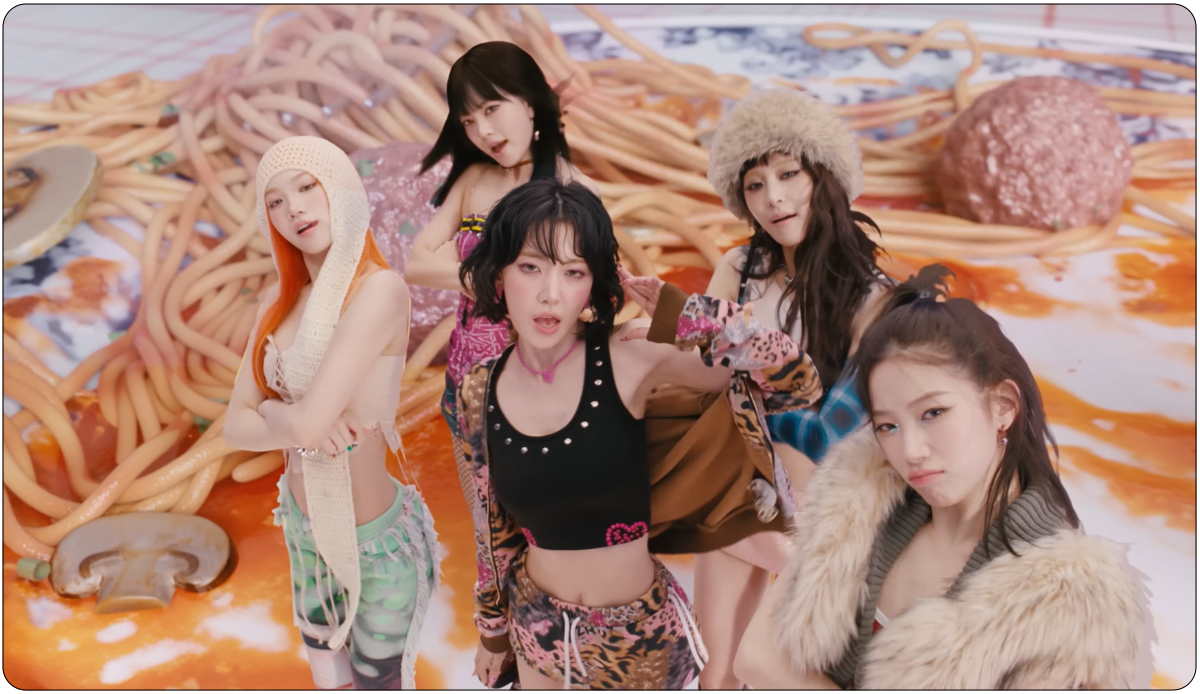
But that’s for 2026, the best fluid art manipulation we saw this year came from Le Sserafim’s Spaghetti rollout. Months before announcing the song, the South Korean girl group changed their Spotify album covers to feature tomato sauce splatters and sparked a wave of speculation. It’s surprisingly rare to see the distribution platform itself used as a brand marketing channel rather than something more transactional. That is to say, Le Sserafim used their existing art to signal an impending new era, and fuel speculation about the artistic concept rather than give it away and dish out a pre-save link. Nice, different, unusual.
Then the produced universe rolled on: the group posted a video across socials called It’s a Tomato Incident with members holding spaghetti plates. Meet and greets with members asking fans about the best pasta places in each city plagued TikTok.
Then ultimately? Le Sserafim’s “debut single album” which is the most wildly inventive (and maybe stretching of the friendship) spin on releasing a single with some remixes, is released. And what do you know? Spaghetti is a mediocre track which has virtually nothing to do with pasta. The lyrics compare the group to spaghetti stuck between your teeth: annoying, persistent, can’t get it out of your head. Mediocre or not, the latter has proven true. Moreover, from that one metaphor they built an entire universe.
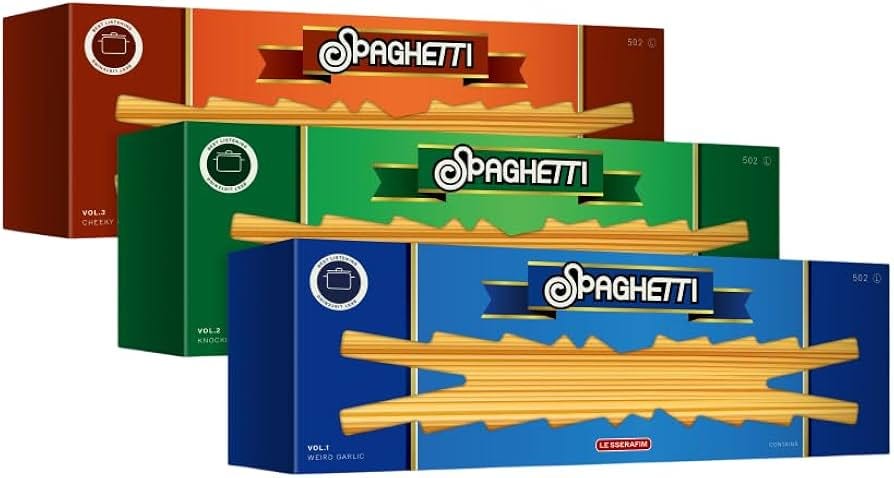
Post release Le Sserafim appeared in multiple how-to cooking videos with Korean celebrity pasta chef Napoli Matfia. When the album dropped physically, it came in 20 versions including Weird Garlic, Knocking Basil, Cheeky Neon Pepper, Crema Silver, Salsa Pink, Pesto Green, Alfredo Blue, Ragu Red, Béchamel White. Lyrics and photo cards were sold in herb and spice packets, reality show appearances were devoted to the members’ pasta preferences. Chaewon’s hair was dyed the same orangie-red colour that you try to scrub out of a Tupperware container that once housed bolognese. A “debut single album” became an IP universe across just about every touchpoint.
Sure the haters will call it peak brainrot content and – yeah – maybe they have a point. Spaghetti didn’t create a universe that productised emotion or a particular set of values that would create brand evangelists in the Dr Marcus Collins sense, but they sure knew how to commit to the bit. The Spaghetti rollout productised randomness itself, and with persistence, that became an inescapable brand strategy.
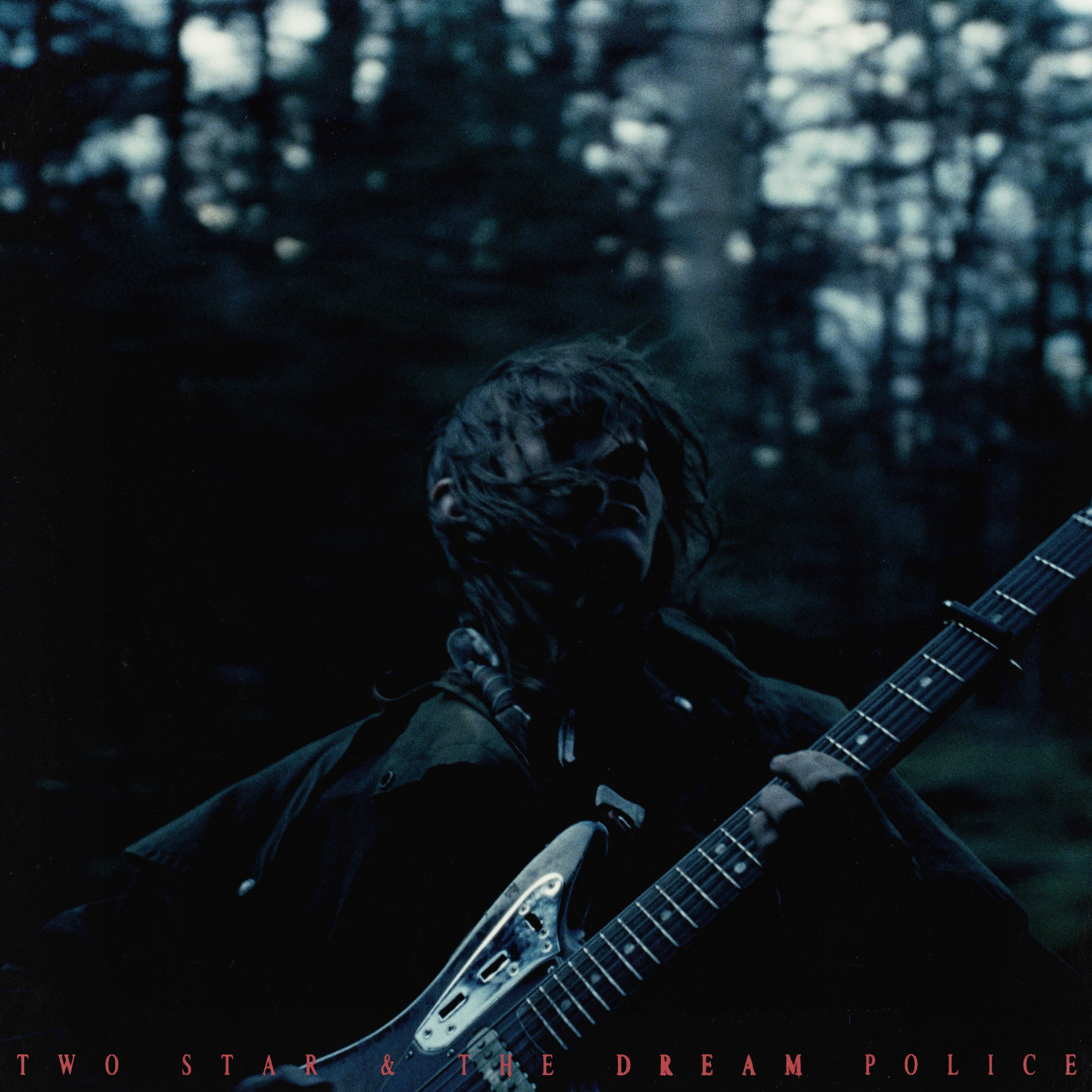
Now, from the ridiculous to the sublime: American singer Mk.gee. Alongside frequent partner Dijon, the artist has swept from seeming obscurity to be the darling of the alternative music world in 2025, despite his album Two Star & The Dream Police being more than a year old (it was a bit overlooked on release, which was a shame). He’s co-written on multiple Bieber albums, started in countless critic debates about the future of music (including glowing references from Eric Clapton, Matt Healy and John Mayer) and despite all of this, the guy has stayed largely mysterious. Apart from a few interviews years ago, he has remained highly selective with media and virtually non-existent across socials.
So how the hell does this guy manage to buck every brand strategy in music?
The answer is unfortunately exclusionary to many artists and perhaps a little anticlimactic for our audience: he’s just that good.
But seriously, for a musician or a brand it is still possible to buck the trend and not buy into the need to build an IP universe. But if you’re going to do it, you have to be brutally honest with yourself: is your product really that good?
If you have a true one-of-one, then the landscape starts to change a little bit. Eric Clapton compared the feeling of discovering Mk.gee to how he felt when he first discovered Prince. Mk.gee’s created an entire sonic universe everyone wants to replicate. Rather than creating evangelists by engaging with fans online, chatting to media or building an IP content machine, the product innovation speaks for itself.
Now the biggest pedal manufacturers in the world are making mock-ups of Mk.gee pedals that John Mayer of all people has recorded lengthy demo videos for. His approach to recording becomes IP that other musicians evangelise on his behalf.
But remember, unless Eric Clapton is going to be singing your praises, which is a truly hyper-rare scenario (if that wasn’t excruciatingly obvious)... you best fire up the old TikTok and start talking about pasta. That metaphor landed right?
Explain
How big ideas are translated into words that resonate, build identity and set the context for a smart conversation.
Le Sserafim again. The spaghetti stains on Spotify appeared months before anyone knew what they meant. Fans started speculating. Then the It’s a Tomato Incident video. Then the meet and greets with pasta questions. The visual world-building preceded any official announcement. By the time they revealed the song title, fans had already constructed half the narrative themselves.
Charli XCX did something similar with Brat. The neon green (#8ace00, selected from 65 shades for maximum shock value), the Brat Wall in NYC that updated in real-time, the @360_brat burner account created 10 months before release. The @360_brat account only let in a small group of fans who got to see work-in-progress clips.
Rather than release music videos, Mk.gee released a series of stylised live videos performing tracks from Two Star & The Dream Police in some sort of deeply nostalgic mid north-west industrial town that somehow feels like a lived experience to one of us in particular despite said person growing up near a beach in Australia. He wore the same now-iconic zip hoodie, shirt and tie with long hair and grizzled peach fuzz in every clip. No one knows what it’s really supposed to mean, other than the fact it is provocatively unique, compellingly simple and a remarkably consistent way to communicate a universe through the product itself.
The point, as we’ve said in a number of COMMPRESS issues now, is that you can make people work to decode your brand language. Cryptic doesn’t mean unclear. It means you’re giving people enough information to reverse-engineer the concept while withholding the conclusion. They do the assembly themselves, which makes them more invested in the outcome.
Sabrina Carpenter has gone hard on cinematic references. Her Taste music video with Jenna Ortega pulled from Death Becomes Her, Kill Bill, The Texas Chainsaw Massacre and other movies. Stage setups with spiral staircases and flowing curtains like a movie set. She changed the final verse of Nonsense at every show to reflect the city or current trends — expectation variation as a tactic. Audiences come expecting the format (Nonsense outro will be different) but don’t know what they will get (which makes it shareable).
Carpenter opened for Taylor Swift’s Eras Tour, which gave her showmanship reps at scale. Then she took that and built her own brand language around Hollywood glamour meets Gen Z irreverence. The opening slot became an extended proof of concept.
On the other side of this, there’s outright fanservice. We’re not going to spend too much time pontificating about the much-analysed Oasis x Adidas collab because it’s pretty obvious to anyone who knows even the rudimentals of branding strategy that it was a no-brainer. Arguably the biggest maker of football gear in the world teaming up for a collection with the most aggressive Man City fans in the world was pretty logical. Don’t forget this is a band fronted by the guy who described the things he can’t live without in the following order: “football… me family, me missus, me kids, me dog”.
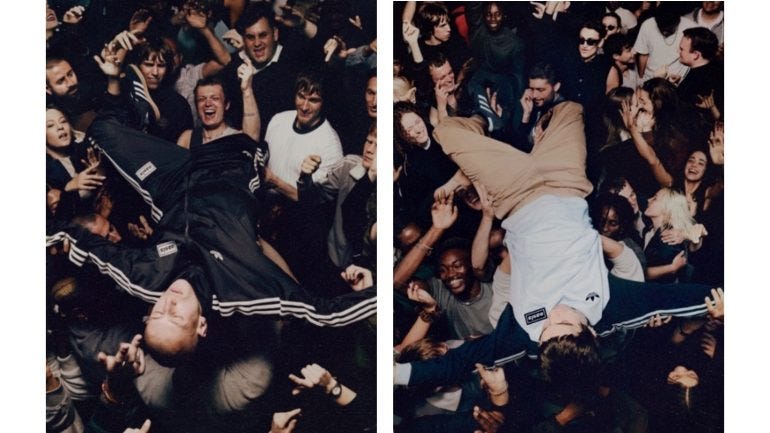
But it’s not so much the fact that the collab sold a heap of units; it’s the fact that it used iconic design language from three enormous brands (Man City, Oasis, Adidas) and still made it hyper-wearable outside of a stadium. One of us legitimately saw two different people wearing Oasis gear in the span of 30 minutes, while running around Sydney’s Rose Bay at 7.00am. That sort of proliferation is wild when you think about it. This is a classic example of Andelic’s product universe at play, but critically, it creates new contexts for a brand’s language and identity to appear. Great brand explanation doesn’t have to be purely advertorial or promote the core product itself. In fact, it should chase optimum utility in its own right.
Amplify
A conversation means someone has to listen and respond. Cleverly amplifying the message to the right audience, at the right time, is the final piece of the puzzle.
Putting TikTok aside as the pre-eminent amplifier for most modern music, it’s still possible to keep things analogue. Real-life influence works. The pedal manufacturers ripping off Mk.gee do all the amplification for him. He’s not managing anything, he’s just making sounds other musicians want to copy, which makes them talk about him, which makes them his distribution network.
When your product innovation is exciting to practitioners in your field, they become unpaid spokespeople. This is how products spread in professional communities. The person using the thing explains to others why it works. It’s a reasonably unappealing B2B analogy but you’d be hard pressed to argue it hasn’t worked. More to the point, it works in B2C as well.
Mk.gee’s frequent collaborator, undeniable genius and big fan of shouting, Dijon, is probably our favourite recent example of this. Again, he has engaged in minimal social activity himself, but he has set the internet alight through third party videos across his current tour. How? By just being a really great guy. As well as a huge Geese fan (aren’t we all dude).
Dijon mixes everything live so songs never sound exactly like the album, he delivers fanservice via long encores with deep cuts from eight years ago. After shows he stays outside meeting people, signing stuff, having very normal conversations (often about Geese). All of this is to say: there is still enormous value in any brand providing unique, thoughtful one-to-one or otherwise intimate conversations with your closest evangelists. Rather than thinking about how you’re going to talk to a million people at once, think about how you’re going to have the best conversation possible with five. Promise those five will have that same conversation with another five… you see where this is going.
It’s just a big pyramid scheme.
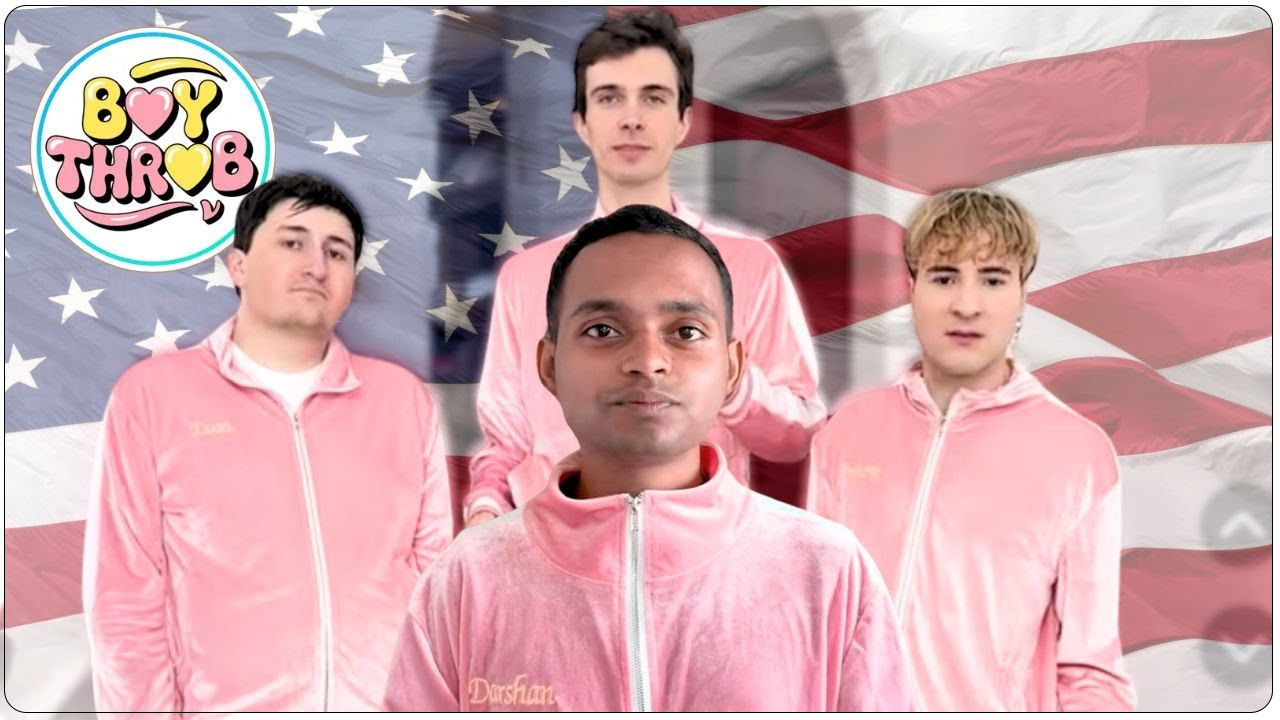
And now, back to TikTok, because we’re not going to leave you for 2025 without talking about Boy Throb. You can completely bin everything we’ve said above. That’s right, just ignore it. Ana Andjelic? Wrong. Product is absolute priority? Insane. If you’re Boy Throb, you can spike from zero to 1 million TikTok followers in a month. All you need is four guys in matching pink tracksuits, one member stuck in India (Darshan), and a solid hook: the requirement for followers to “prove” he qualifies for a US work visa. They perform covers but change the lyrics to be about getting Darshan a visa. Darshan appears via laptop screen.
It’s completely ballistic.
Their most viral clip to date takes place in a nursing home with Darshan on video call. They put their name out to public vote, but when the public named them “Epstein’s Angels”, they opted for the second choice. They insist they’re “legitimate artists” not satire, currently writing “original music”. They have a merch store. The merch is bad. Actually, maybe now thinking about it, this cap is kind of sick.
The thing is, you can look us in the eye and say Boy Throb is clearly a high-concept pisstake. Maybe it is, but pile all the hate on it you want, these throbbers are out there amplifying bigger, harder and faster than plenty of artists who are wondering why no one’s found their album yet. Sure, you don’t have to throw on a pink tracksuit, but don’t ignore the fact that a rock-solid brand, dogmatic consistency and a hook that gives the fans a reason to tune in can take you miles in no time at all. Imagine if Boy Throb’s music was any good?
Get Darshan a visa.

Picks & Recs
‘Tis the season
We’ll leave you to guess who’s who:


