Pity the Reader
Issue 1: The perfect place to start in sparking a smarter conversation

Readers are feeble, restless, distracted things. Prone to getting lost or bored or muddling things up. One wrong sentence and they’ve veered off the path and into a bin. Too long a pause and they’re asleep. And then what?
The trick is to adopt a service mindset. Attention is fickle. Get to the point. Treat the reader as you would a drunk, hungry friend—coax them in the direction you want them to go with clear, simple language. Don’t make them do more than they need to do. Don’t lead them astray.
As the man who coined the phrase, Kurt Vonnegut, famously said: “Our audience requires us to be sympathetic and patient teachers, ever willing to simplify and clarify – whereas we would rather soar high above the crowd, singing like nightingales.”
Pitying the reader (your audience) is the perfect place to start in sparking a smarter conversation. Don’t just start a conversation about something they’re interested in, but make the entry point to that conversation as easy as possible – if you can – make it harder to ignore than to participate.
Welcome to the first issue of COMMPRESS. Let’s unpack how taking pity on your reader unfolds across action, explanation and amplification.
1.Act
The big conversation-starting ideas, strategies and executions that give businesses something to talk about. It’s about walking the talk to lay the foundations of a powerful message.
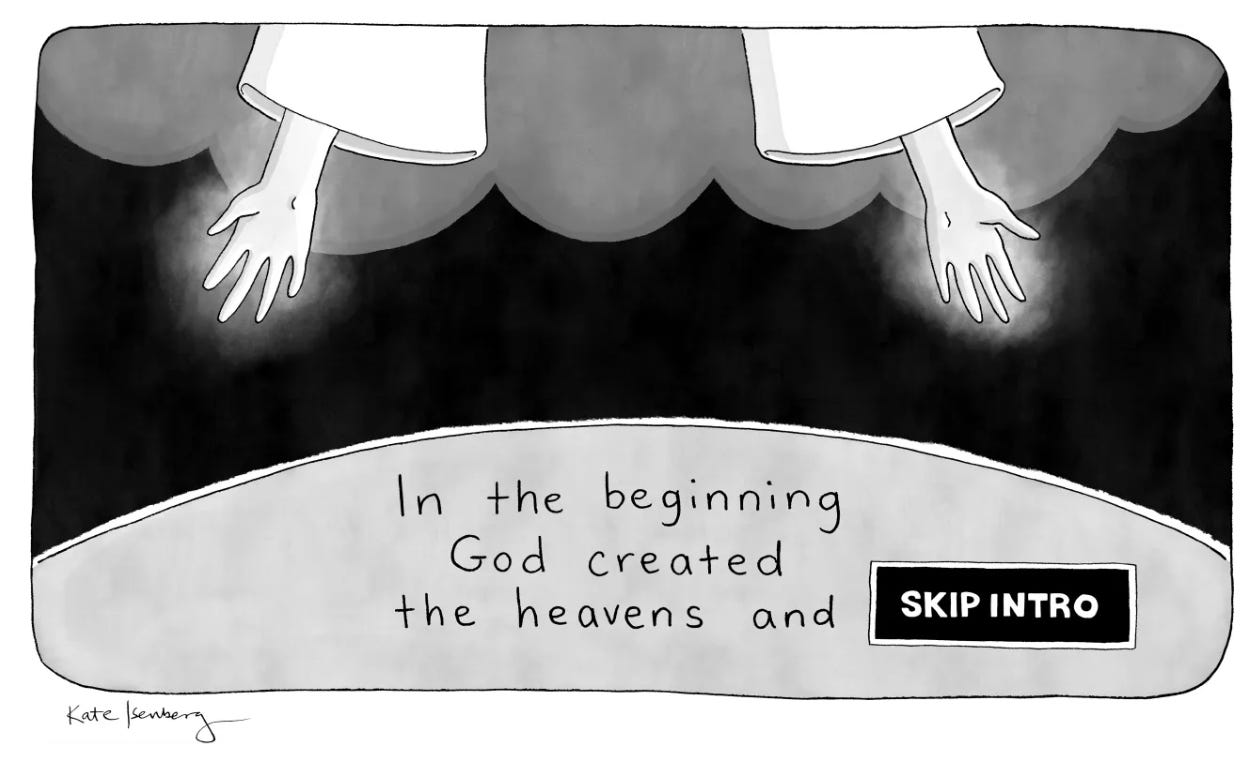
TO PITY THE READER, YOU HAVE TO UNDERSTAND THEM
What actually holds attention? This deep dive is a great place to start.

THE PROOF IS IN THE PACKAGING
We can say with (almost) absolute confidence that in the last 24 months we’ve all fallen victim to the subscription box trend or a subtle variant of. You know what we’re talking about, the sorts of businesses who package up a bunch of different products you’d otherwise spend hours researching and deliver them at convenient intervals. Need to spice up your next sandwich? There’s Condimental. Think you might be iron deficient but wonder if a calcium hit could have the same effect? Try Vitable. We won’t even go down the rabbit hole of wine discovery services.
There’s a subscription for every situation, and there’s a reason: like all outstanding disruptors, it makes things easier for the audience (the reader) solving a problem. The genius here is that subscription boxes solve not one but two problems: the panic of indecision and hours of research through curation, and the need to constantly re-up your supply through scheduled delivery. It’s the very essence of taking pity on the reader through action. Providing expertise in the most no-nonsense, set-and-forget fashion possible.
Incidentally if you want to cash in here’s the 2023 outlook for subscription boxes, we’ll take a 10% cut.
YOU COULD SPEND A BUNCH OF MONEY DREAMING UP NEW WAYS TO GET MORE PEOPLE BUYING MAYONNAISE
Or, you could just cut to the chase. Meet them where they are.
Hellman’s used a bloody brilliant bit of insight to understand what their audience wanted, and rather than expect them to buy a jar to compliment their nuggets, they found an easier way to give the people what they want, scoring them a Lions nod in the process.

2. Explain
The way those big ideas are distilled into words that resonate, build brand identity and nail the message.
SAY WHAT YOU MEAN TO SAY
When it comes to pitying the reader, may we present the original and best. Kurt can and will teach you all you need to know.

WITHOUT GETTING CAUGHT UP IN THE WAY YOU SOUND
Everyone’s talking about brand voice, but if you’re preoccupied with your own voice, are you really thinking about the reader?

COMPLEX ISSUE? IGNORANT AUDIENCE?
Outcome aside, it would be remiss of us for not mentioning the effectiveness of this campaign for its cutting through the confusion and using an incredibly effective explanation to pity the reader and dispel doubt in the most straightforward of terms. It’s just a shame it wasn’t amplified in time.

3. Amplify
It’s not a conversation if no one’s listening. Cleverly amplifying the message to the right audience, at the right time, is the final piece of the puzzle.
THINK SMALL
It’s one of the most famous ads of all time, but we’re still talking about it for a reason. Yes, the explanation is perfect, but what really sets this off? The message being amplified with a big, obnoxious, whole-page ad to land a very simple message.

MISERY LOVES COMPANY
Sometimes you don’t need to say anything at all: just use your platform to let your audience know you understand them, amplify their plight and make their next decision easier.


ON YOUR LEFT (AND RIGHT)
Sometimes the reader is also a driver. Pity the driver who needs to know, in the most cursory of glances, where he might find a snack and you might just win a Cannes Lions Grand Prix.
Amplification is not just how you say it, but where you say it. McDonald’s somehow managed to further simplify their iconic logo to adopt a service mindset and land two very clear, very helpful, messages—there’s a McDonald’s on your left, and a McDonald’s on your right—plus a secret third message: wherever you are on the long, windy road, a cheeseburger is never far beyond reach.
You’ll notice that this issue seems to over index on examples from fast food and FMCG, which is no coincidence. Being that both share the word “fast” it doesn’t take a genius to work out why pitying the reader is of such importance for these categories. They are, by their very nature, about ease and accessibility. It makes them the perfect case studies.
WHILE WE’RE HERE
Speaking of condiments, and grabbing people’s attention while you have it: Heinz and Taylor Swift.

Picks & Recs

The difference between pitying the reader and rendering them pathetic. Big Muffin caught onto the fact that people mostly want the top bit, and went ahead with something that could be described as some sort of reverse circumcision. But ask yourself: is it even a muffin without the base? What are we to do with this? This Cliff Note of a muffin.
Good journalists don’t bury the lede.
Great editors do the above.
TL;DR
Not everyone pities the reader.
It doesn’t often go well.
1.QANTAS TERMS AND CONDITIONS
A mess. But maybe there’s a way forward?
2.FOOD BLOG PREAMBLE
Cut the poetry and give us the recipe, Suze.
3.X Æ A-12
Or any child named by Elon Musk and Grimes.
4.THE WHITE MALE MAGNUM OPUS
No shame in an uncreased spine. If your book is sold alongside a Reader’s Companion, who are you really writing for?