

Proof of Life
Issue 62: Why brands are roasting themselves
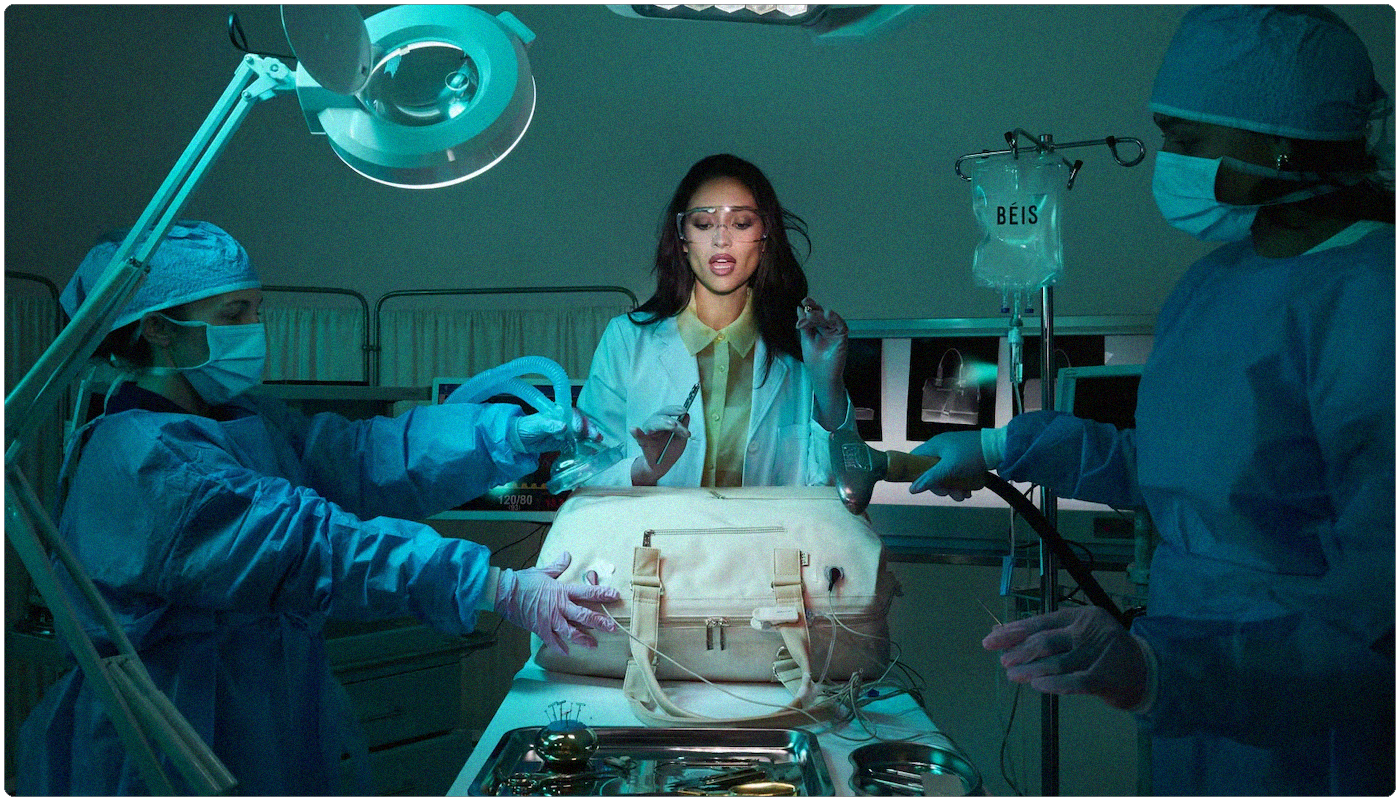
Shay Mitchell would like you to know that her best-selling bag will, carried on its own, rip your shoulder to shreds. She read that review out herself in an ad for her brand Béis: “Lol the Weekender is indeed going to rip your shoulder to shreds if carried by itself.” Then she redesigned nine of the products around what customers had complained about and built the campaign out of the complaints. “I’m literally building it with you,” she told The Business of Fashion. “Tell me what you would like to see improve.”
Most brands treat criticism as something to bury. A handful have started doing the opposite. Sam sent round the Business of Fashion piece pulling the thread together, and the names on it – Béis, Dove, Primark – are all mining their own bad press for material. Laughing along takes the sting out of the critics but it also shows something less common: that someone at the brand is paying attention.
Turning reviews into assets isn’t reinventing the wheel. There’s the litany of tourism ads led by Vienna and co-opted by the likes of Copenhagen. Domino’s did it in 2009 by building a whole turnaround on customers calling its pizza cardboard, filming its own chefs reading the reviews and then fixing the recipe. That act of public penance (and the results it generated) helped turn Domino’s into a stockmarket darling, adding something like $US12 billion in enterprise value over the decade that followed. Fashion was slower to the idea, but Instagram and Reddit have turned every misstep into a public event, so the flak got too loud to ignore and – in the end – too useful to waste. In February, Dove put real Reddit reviews of its new 10-in-1 hair mask on billboards, the flattering ones featuring alongside ones like “I hate the smell, it’s like an old lady wearing too much intense perfume”. The negative reviews were far less common, sure, but they also gave the positive reviews a greater chance to sing in contrast, backed up by the insurmountable trust garnered by a brand willing to be totally transparent about what customers think.
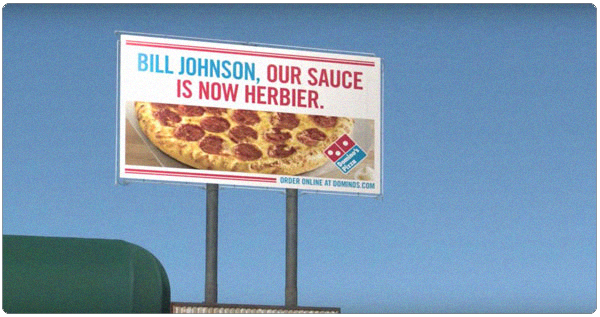
This is why owning the bad reviews can be so effective: it immediately creates trust, but it also reminds you that there are – in fact – people behind the brand and the purchase of its products. Having said that, only hand your critics the microphone if you’re fairly sure the product will survive the scrutiny. It’s the same bet the David protein bars were making earlier this year, daring you to believe 150 calories could taste of anything. But the trick has limits: unless you’re using the roast to highlight that the good far outweighs the bad (a la Copenhagen or Dove), you should only lean into the complaint you can actually fix. As VML’s Ellie Bamford put it to The Business of Fashion, you don’t make light of a deep moral or ethical failure, you pick the thing you can resolve to the customer’s advantage, or you pick a perception you actually want to shift.
The self-roast can do a third thing too: correct the record. A fair bit of Béis’ redesign fuss was really re-education, using the jokes to tell customers the Weekender was always built to slide onto a rolling case and that the Mini works as a personal item on its own. Owning the gripe buys you the attention to fix the misunderstanding that started the whole ordeal.
All of this is really tone of voice, the explain in our act-explain-amplify model. You earn the right to be self-deprecating the way Duolingo earned the right to be unhinged, in small deposits over years.
Primark did a version in March with “Shockingly Chic”, which featured models feigning horror that clothes that cheap could look that good, a straight spoof of the luxury ads it couldn’t afford to imitate seriously. Being in on the joke that Primark is nobody’s idea of a catwalk brand landed harder than any attempt to pretend otherwise. Even the stiffest houses at the top end of fashion are loosening up, partly, because they’ve all built content libraries now and something has to fill them.
The brands that come undone are the ones that want the funny voice without the years that allow it. There’s a much-shared LinkedIn carousel making the case that every brand now wants to be your best mate. It’s exhausting. Warmth you haven’t earned is a bit like a stranger being oddly familiar with you. The line you’re walking is between self-aware and self-conscious, which side you land on depends on whether there’s anything real behind the joke.
The reason all of this is surfacing has a lot to do with the machines. Scepticism is running hot. “People are more sceptical than they’ve ever been,” Bamford told The Business of Fashion, and audiences now assume the polished thing is fake before they assume it’s real. A wonky, self-aware brand is trustworthy precisely because it’s hard to fake and the rawness lets people feel they’re behind the scenes, in on the thing rather than the target of a finished ad. Elizabeth Tan at the forecaster WGSN put the appeal plainly in that same article: publishing the real reviews adds “a layer of real humans, it’s not just the dead internet with bots adding comments on your product”. It’s the dead-internet theory rewritten as a marketing brief. When the feed is bots reviewing bots, a real person calling your mask old-lady perfume becomes proof of life.
It’s no surprise then, that in this environment Substack’s chief executive Chris Best switched on an AI detector across the platform, claiming: “We’re sick of slop and we don’t want Substack to turn into LinkedIn.” The tool reckons LinkedIn now runs at 41% machine-written, Substack around 10%. Brutal.
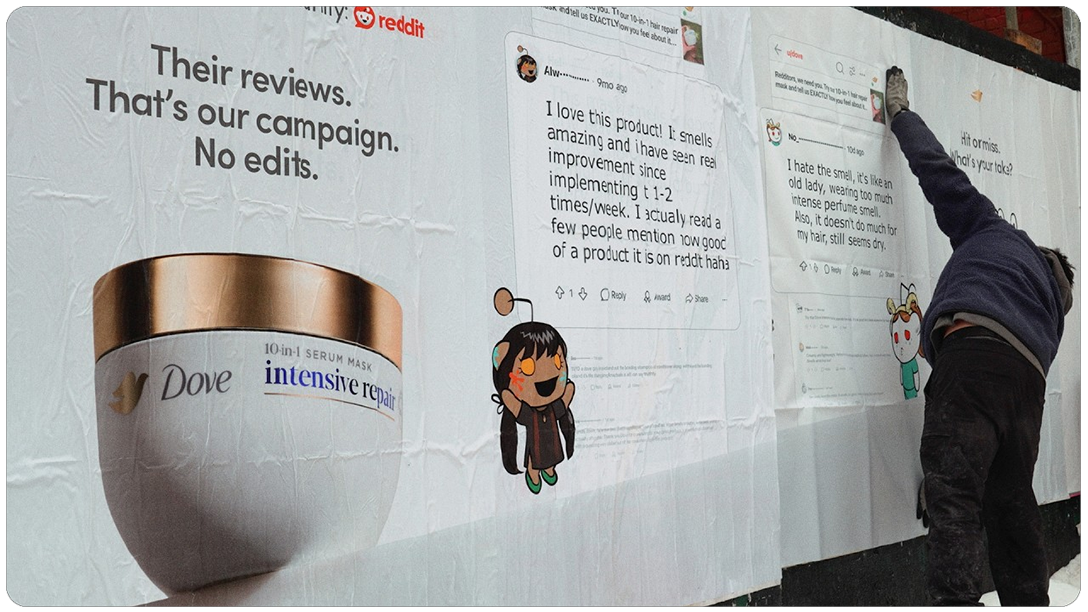
Best is doing a version of what Béis and Dove did, albeit without roasting his own business. Ultimately it comes down to instilling conviction that a person is still in the room. Having said that, Dove’s Reddit campaign didn’t only win over sceptical humans: AI search tools lean on Reddit as a store of honest opinion, so all that curated candour also pushed Dove higher up the answers in ChatGPT. The Dove team knew the community would clock any heavy hand interfering. Brands are now hamming up their humanity partly so the machines can still tell it’s in there. We’re going to call it cyborg marketing (note that as the SECOND Donna Haraway reference COMMPRESS has managed to pull off).
The same instinct turns up wherever a brand can behave like a person instead of a logo. For a while a viral social format was for a vaguely known influencer to board a flight, caption it “let’s see how many brands can comment before I land”, and watch Samsung, Apple and others pile in under a video for the lols. It’s there in Gelato Messina’s Instagram or Wendy’s social presence: the brand gone rogue tone that becomes less about brand tone of voice and more of a reminder that there is, in fact, just an employee with a log in, password and creative licence to do whatever the hell they want on the internet.
Having said all this, it all only counts if you’re adding value. Diving into the comments is a horror if you aren’t funny. And the day every brand runs the same self-aware bit off the same content calendar, the self-awareness is gone. It all just becomes a blancmange of slicker slop.
So roast yourself, publish the bad reviews, play the fool. But don’t do it to be cool or chase a trend. Do it to remind your community that you’re not a logo, name, product or service: you’re a group of people willing to have a conversation.
What we’re obsessed with this week
Tess
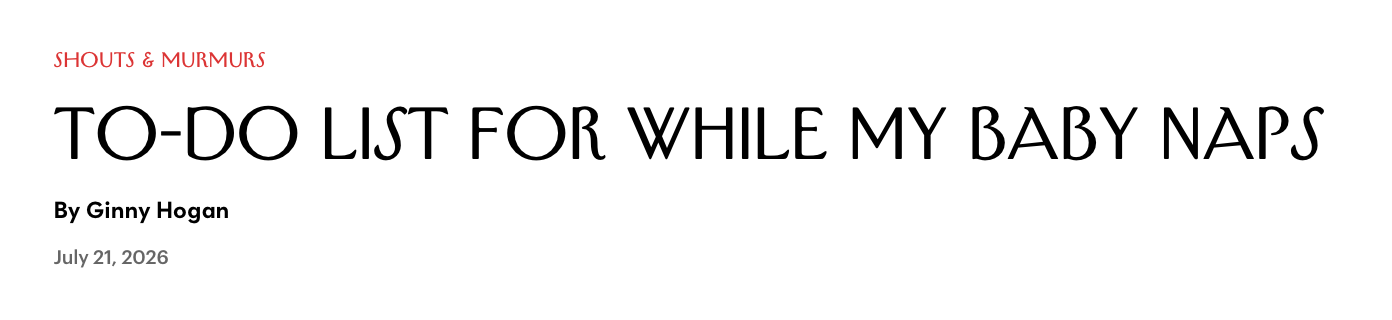
This wonderfully funny satirical Shouts & Murmurs piece in The New Yorker: To-Do List for While My Baby Naps. It takes the tiny window of opportunity every parent dreams about and stretches it into an increasingly ludicrous catalogue of impossible achievements. Beneath the absurdity is a very real truth about modern parenting, where even “rest” can feel like another item on the to-do list.
Sam
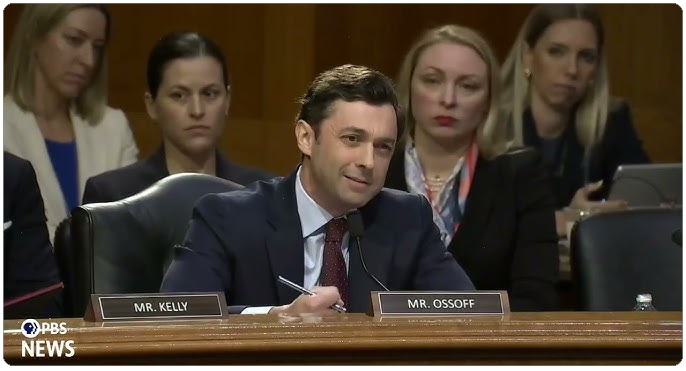
It’s Jon Ossoff, the US Democratic senator from Georgia. If you haven't come across him yet, go watch this video of him questioning Trump’s nominee for Director of National Intelligence, Jay Clayton, during a Senate confirmation hearing two weeks ago. Ossoff asks Clayton (repeatedly, calmly, and without raising his voice once) who won the 2020 election. Clayton refuses to answer. But Ossoff doesn’t flinch or grandstand or anything, he just keeps pressing until Clayton physically has to turn away from him in silence. Then Ossoff delivers the line: “Isn’t it humiliating to be unable to answer this question? To have to indulge the president's delusions?” It’s a cracking line. It’s the tone that does it for me… low, measured, quite unsettlingly serious. Folks commenting on it have made comparisons to Tom Cruise pressing Jack Nicholson in A Few Good Men. Back in February, Ossoff coined the phrase “the Epstein class” to describe the Trump administration at an Atlanta rally that went mega viral and has since become a rallying point for Democrats calling for sharper and more populist messaging. He says he has zero interest in a 2028 presidential run but prediction markets have doubled his odds in the past month alone and people online are calling his recent appearances “Succession-level” political maneuvering. Whether he runs or not, it’s been refreshing to watch someone in American politics who looks like they’re actually prepared to say what they think without checking the room first.
Neil
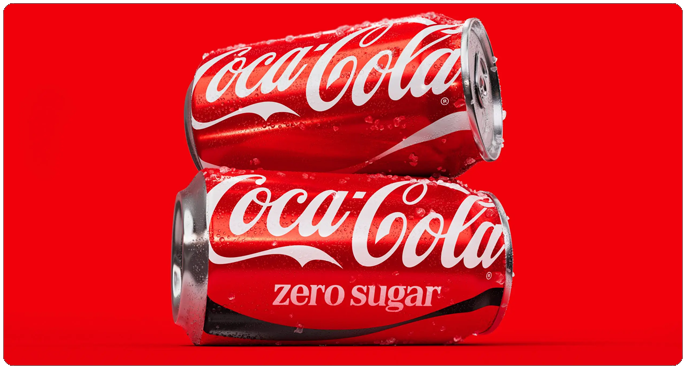
The marketing folks at The Coca-Cola Company are smart people, but even smart people do things that are puzzling. Earlier this month, they announced new packaging for brand Coca-Cola and its offspring, Coca-Cola Zero Sugar. The key change? Instead of black words on a red background, Coke Zero will be white words on a red background… just like the main Coke brand. Sure, the former will have the words “Zero Sugar” in big letters on it. But did no one spot the obvious danger: someone not paying attention and picking a can or bottle of Coke instead of Coke Zero… because they are going to look so similar! As a dedicated Coke Zero drinker (yes, I know the risks), I won’t be happy when the new packaging gets to Australia. I’m not dumb, but I do reach for things in a supermarket or C-store by instinct. I’m sure the Coke people researched the crap out of this change. But what people say in research groups doesn’t always tally with how they behave in the real world. I’m hoping Coke sees the error of its ways and brings back the black words. I’m too vain to drink full-sugar Coke.
Eliza
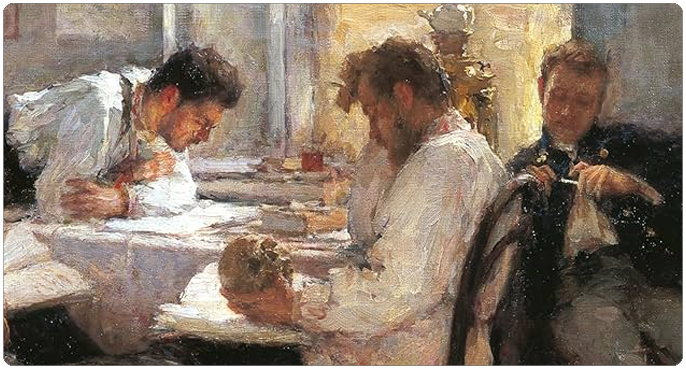
I’d never thought I’d be able to say it, but I did it; I actually finished The Brothers Karamazov by Fyodor Dostoevsky. The Brothers Karamazov is less a novel than a full-scale psychological siege. It’s dense, sprawling and occasionally feels like every character has four names purely to test your resolve, but once it gets its hooks into you, there’s no escaping it. Dostoevsky turns murder, faith, guilt and family dysfunction into the most compelling argument you’ll ever read for why humans are endlessly contradictory. It’s exhausting, brilliant and somehow leaves you feeling like you’ve lived several lifetimes by the final page (in a good way!). A masterpiece that absolutely earns its reputation; just clear your schedule, and maybe keep a character list handy.
Andrew
Guys I made an online friend! The internet is crazy. But seriously, I subscribed to a new Substack recently, left its latest issue at the top of my “other” inbox to finish reading, and it seemingly blew up the view count by clicking on it every time I opened that inbox enough for its author to reach out personally. This was vaguely mortifying. Nonetheless I’m going to double down on being a fanboy and say the latest issue of Patrick Kho’s The Chow is excellent. One, because it allows me to live vicariously through a summary of the Lin Kwai Fong club scene, but more specifically because it speaks to a nagging thought I’ve had after reading W. David Marx’s Blank Space, and subsequently this review asking why older white guys keep saying culture’s dead.
Kho explores (among other things) the rebranding of goth, the symbolism of mushrooms in club culture and the liminal spaces of the internet that have given rise to whole new movements in music. His thesis “far too many critics like to say that the 2020s are devoid of new art and music. But perhaps, the true newness can be found in what we’re struggling to name” is my whole reason for sharing. Without drawing too long a bow and blowing out the word count, this is the challenge presented by a lot of the work I’ve been tackling lately: distilling far-reaching, complex and to some minds boring concepts into things that resonate with people. Point being, you can’t act on or give a shit about something if you can’t name it in simple terms. Until you do that, those on the outer will continue drawing their own – often wrong – conclusions and writing the alternate narrative for you. Mind you, some things are always much cooler if they stay undefined.