

The 2026 global intelligence crisis
Issue 47: War of the Words
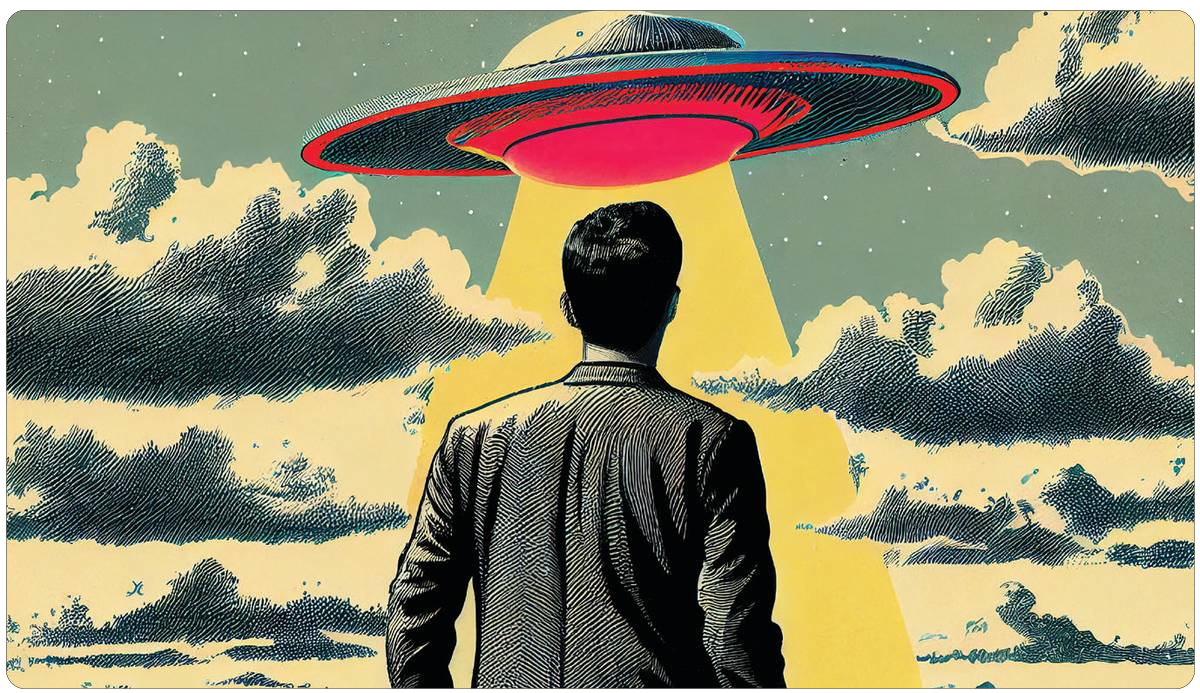
Orson Welles’ 1938 War of the Worlds broadcast convinced America that Martians had landed in New Jersey. The radio play was fiction, clearly announced as such, but thousands heard fragments out of context and panicked in the – quite literal – streets. The country was still crawling out of the Depression, heading toward another World War, and the idea of alien invasion felt plausible enough to trigger mass hysteria.
Fast forward to now: just last month, a Substack called Citrini Research published what read like a leaked corporate memo from 2028 (yes, you read that right). Titled “The 2028 Global Intelligence Crisis”, it painted a visceral picture: white-collar unemployment hitting 10.2%, the S&P 500 down 38% and a “deflationary spiral” triggered by AI-driven overcapacity. It was a pseudo-satirical essay exploring worst-case scenarios, co-authored by James van Geelen and Alap Shah. The next day it triggered an actual market sell-off, with the Dow falling 822 points. Enterprise software stocks like CrowdStrike and Zscaler tanked nearly 10% in hours. Let’s be clear about this: unlike Welles in the 1930s, most of the audience knew this wasn’t real corporate intel, but it felt convincing enough in fragments that traders started hedging against the scenario it painted anyway.
That’s much less good.
Max Read broke down the aftermath beautifully, but if you cbf clicking that link, he explains that the actual threat to global markets right now isn’t AI but the fact that a $US999-a-year Substack written by one person can accidentally tank markets because information moves faster than context. Read argues we’ve entered an era where “vibes” are now a leading economic indicator. Hell, just last week The White House argued that Trump “had a feeling” about Iran as partial reasoning to why they acted (not that it yielded any sort of approval rating anyway). Back to the point at hand: something gets read, interpreted out of context, reposted by someone else as authentic, and suddenly it’s shaping real-world behaviour. Unintentional misinformation is now just as dangerous as the more traditional fake news we’ve come to know and loathe.
Jasmine Bina at Concept Bureau takes a different lens, arguing we’re now living in a world of “real monsters”: random wars, inflation spikes, political destabilisation, climate disasters, AI disruption. The cognitive load is justifiably overwhelming. People have become numb. And the brand voice society needs right now isn’t empathy. Nor is it more understanding or validation. It’s a “monster slayer”.
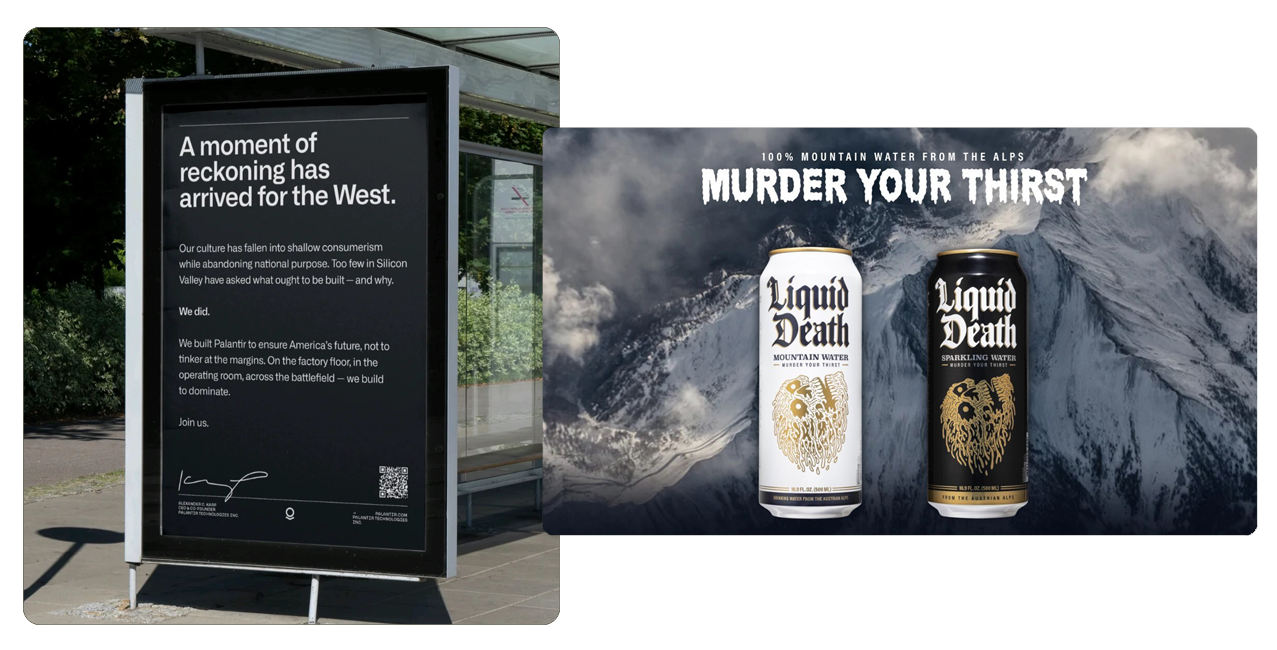
Yep, we know. That sounds absurd. Until you realise what she means: people don’t want brands empathising with their fears anymore; COVID exhausted that playbook of We’re all in this together piano ballads. A monster slayer doesn’t offer a hug; they’ve got weapons or a shield. They go and get the fucking job done. In practice, this looks like Palantir leaning into its role as a cold, effective defender of Western interests, or Liquid Death aggressively “murdering” thirst. It’s about being assertive rather than reassuring, taking a hard position rather than staying neutral, saying “we understand your struggle” rather than “we are the ones who can help you handle this chaos”.
Trump positioned himself as a monster slayer in 2024 and won re-election on it. He was going to slay economic instability and cultural fragmentation. Then he became the monster himself through denial, exposed lies, soundbites stripped of substance and a lot more, but you’ll be blessed to hear that this isn’t an article about Trump. The 2024 positioning worked because people wanted someone claiming they could fight the overwhelming sense that everything was falling apart.
It really does feel a lot like the Welles era, wouldn’t you say? Society remains anxious at the same time that information feels true enough to act on, even when context says otherwise. In 1938, people were primed to believe in catastrophe. In 2026, people are primed the same way. The monsters feel real because the baseline chaos is real.
Brands need to start thinking different. You cannot “nice” your way out of a crisis of trust. Research from ThinkNewsBrands shows that younger audiences don’t trust news; they actually hate the word “news” entirely because it implies a filtered agenda, they’d rather default to skepticism. You can’t send a message to that audience by reassuring them or validating their concerns, they already assume you’re bullshitting.
Onto the question of smarter conversations: how do you generate authority in a market where context disappears and everything feels like it could be misinformation, where a satirical essay can move markets because fear overrides verification?
Authority now comes from conviction rather than consensus. Be the steady, high-agency voice when everything else is a fragmented mess. If you remember one thing from this, make it that the Citrini Research proves people are waiting for someone to describe the monster out loud. The brands to watch will be the ones who look at the chaos and don’t flinch.
What we’re currently obsessed with
Neil
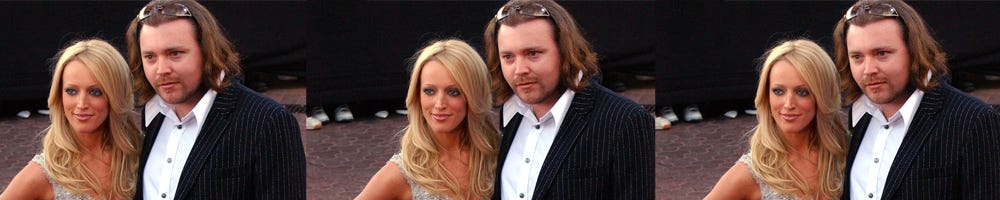
Like most media and comms people, I’m obsessed with the spectacular implosion of Kyle Sandilands and Jackie O’s Sydney (and sort of Melbourne) breakfast show over the past week or so. Hundreds of articles have been published (this one ain’t bad, particularly the Louis Vuitton briefcases bit). It’s been a tidal wave of gossip, clueless “sources close to” who have added absolutely nothing, misinformation, disinformation, baseless speculation and, TBH, in some cases agenda-driven crap. In other words, a classic tabloid Emerald City story. And (some) people wonder why (most) people don’t trust the media: for all the words, opinions and pontificating by reporters, we don’t know much beyond the basic facts. Sure, the key parties are gagged by non-disparagement agreements and lawyers are crawling over all over everything, but that doesn’t excuse the fiction-passing-as-fact “reporting” we’ve seen. I feel sorry for the very good journos (and some really good ones are writing about Kylie and Jackie O right now) who have been dragged into covering the story, told by their editors to file multiple stories a day and don’t have much to go on. The misinformation isn’t entirely their fault, but it sure isn’t palatable or acceptable.
Andrew
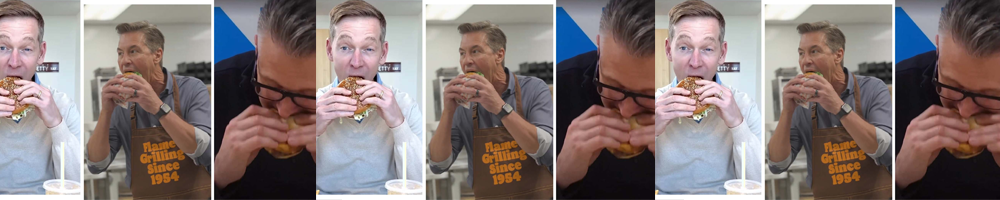
Guys I’m gonna do it, I’m gonna break the fourth wall: I’m obsessed with redundant commentary from PR experts sucking the life out of something a random TikToker explained in a hilarious five seconds flat two weeks ago. Refer to this. If you’re not across McDonald’s CEO Burgergate… my god, strap in. But why do I need multiple professionals to tell me what’s glaringly obvious: the video is super weird and calling your food “product” is pretty fucking obscure. This is why the video went mega viral in the first place, but thanks for “breaking it down”.
Now on to my concluding and no doubt controversial thesis: I think the video was awesome. Look at this streak of weird, uncomfortable brilliance. Did Nathan Fielder direct it? I mean look at that Dunder Mifflin looking background, it’s too well-curated to be happenstance. It’s also consistent with a sort of tongue-in-cheek but professional persona Chris Kempczinski has curated across his whole Instagram, it just took a cursory search.
Any PR is not good PR, we have written many articles on this. HOWEVER, in this particular instance, eh, maybe it is. I mean, it made me want to try the thing and I’m not alone: Google Big Arch Burger right now. Check out how many reviews pop up along the lines of “I tried the viral McDonalds ‘product’ and loved it”. That’s right, there’s heaps. While comms sheeple wax lyrical and take the immediate “this presented as awkward and is therefore bad” angle, McDonald’s is taking their product to the bank.
Tess
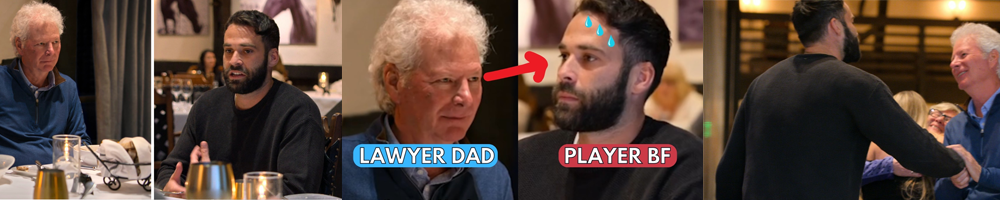
The one thing I’ve made abundantly clear through COMMPRESS is my love of terrible reality TV, so it will surprise exactly no one that I’m currently obsessed with the new season of Love Is Blind.
I should say I have an extremely low cringe threshold, which means a lot of the pod conversations require aggressive fast-forwarding. Watching people get engaged to someone they’ve never seen while earnestly touching opposite sides of a glowing wall is, at times, simply too much for me. But once we get to the honeymoons, I’m keen as mustard.
My favourite scene recently was a lawyer father-in-law absolutely drilling one of the guys, Alex, in what felt very much like a courtroom cross-examination. Frankly, it was needed as Alex is vague AF and routinely makes absolutely no sense, so watching someone interrogate him was deeply satisfying television.
Sam
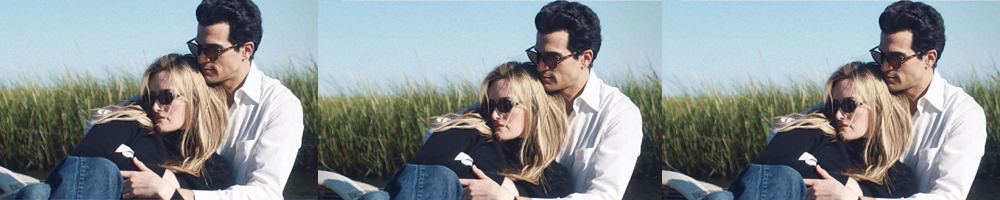
Good lord… as much as I loathe to admit it, I’ve succumbed to Love Story: John F. Kennedy Jr. & Carolyn Bessette on Disney+ and have enjoyed it more than I expected (which is a lot). Nine parts. Five out so far. Binged four at the time of writing this. Given the current state of American politics… well, there’s something therapeutic about retreating into a dead Kennedy love story where everything is beautifully lit and everyone is wearing well-pressed white shirts. And the hats, don’t forget the hats! Throw in some Mazzy Star, some Jeff Buckley, and you’re in for a pretty good time. So I will be here, on my couch, watching beautiful people be dramatically in love in 1990s New York.
Substack Rich People Shit has a nice little write up on it here, where this para, in particular, stood out: “The fascination with the JFK Jr.–Carolyn Bessette era is really about a specific version of New York that feels almost impossible now. A city where social codes were legible and where certain restaurants and habits signaled a particular world. You could understand someone’s life by the places they went and the objects they carried. It also existed before social media flattened those signals into content. Back then, status traveled through places and objects rather than algorithms.”