

For your consideration
Issue 63: The Grammys wrote a great statement and still faced the ARMY firing squad
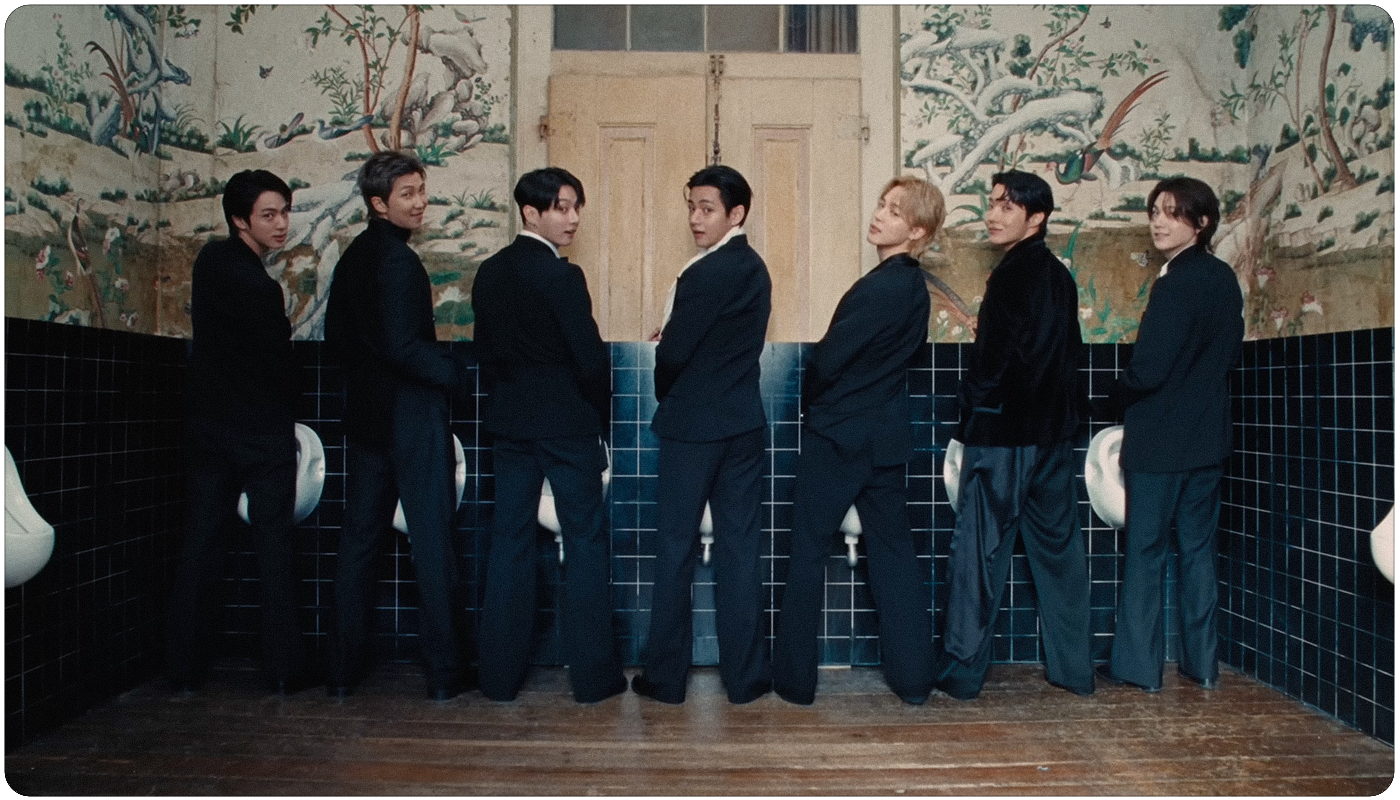
Looks like it’s coming up bloody Andrew again. He’s been looking for an excuse to write about BTS since Issue 35 and then the Grammys handed one over on a silver platter.
On 16 June, the Academy announced five new categories and let the Asian music industry learn about Best Asian Pop Music Performance at the same time as everyone else. K-pop fandom spent the next six weeks calling it a consolation prize. Then last week, all seven members of BTS said they won’t be entering next year’s Grammy Awards, posting the same few lines to their own accounts.
“We have decided not to submit to the Grammys this year,” a translation of the group’s message read. “[We] hope that music can be heard and loved for what it is, rather than being divided by region or language. Thank you to ARMY and everyone who is always with us.”
That takes ARIRANG, a number one album from the biggest group on the planet, out of the running entirely – including Album of the Year – where it was expected to be one of the favourites.
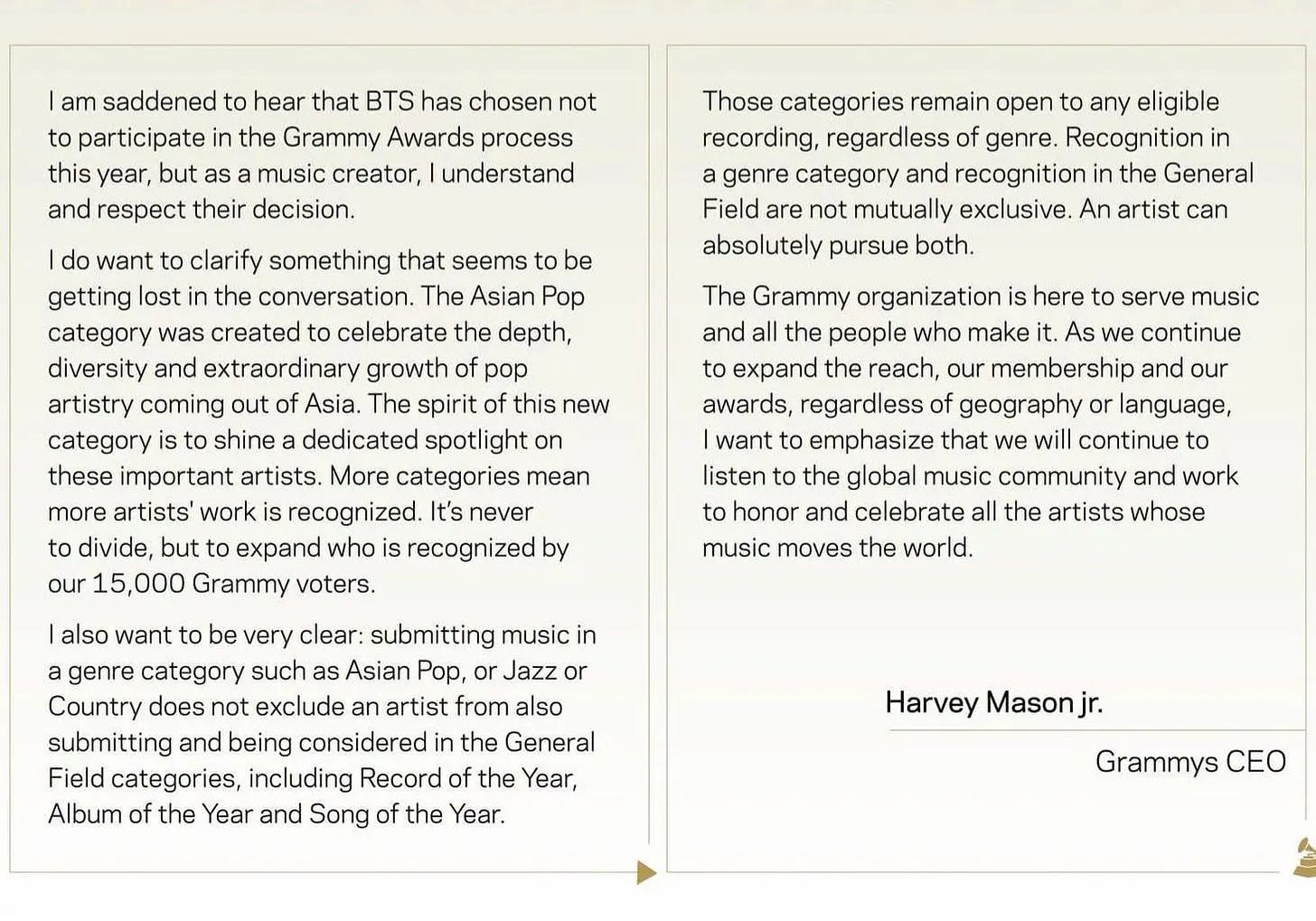
By that evening, Grammy CEO Harvey Mason jr. had a statement out. He put his own name on it, demonstrated contrition and took the moment to offer a fact-check: entering the Asian pop category doesn’t lock an artist out of the General Field. Record, Song and Album of the Year all stay open.
Mason tried hard to defend his organisation’s thinking: “The Asian Pop category was created to celebrate the depth, artistry coming out of Asia… the spirit of this new category is to shine a dedicated spotlight on these important artists.”
Fair enough.
You’ll be expecting the usual from us here, a breakdown of what the Grammys fumbled in response to one of the world’s biggest pop groups opting to not participate in the new Asia Pop category, followed by a vaguely pompous rundown of how we’d have played it. Not today Satan.
The response from the Grammy CEO was… actually pretty good. Speaking freely, we’d have written something close to it. Maybe we would have run it through a few more channels, but on the explain aspect, Harvey Mason jr. said the right things in the right order with his own name on them. And it made virtually no difference.
The fact his response landed like a feather hitting a concrete floor makes this whole fandangle a far more useful case study than a simple bad statement. Act, Explain, Amplify is the model we operate communications strategies on for a reason: the order matters. A good statement is nothing if the premise is built on sand. That’s what we’ve seen play out in the case of the Grammys’ latest snafu: a complete lack of proactive crisis management. In simple terms, it’s about working out how much kindling is stacked in the room long before anyone goes near a match. On this particular issue, the Grammys have had nothing underneath them for a decade.
Anyone who has kept even one eye on the Grammys for the past decade could tell you this particular fire had a lot of kindling. BTS is not the first group or artist to question the politics of Grammy categories. Drake, Frank Ocean and The Weeknd have all voiced similar, albeit different, concerns.
In January 2020 Tyler, the Creator won Best Rap Album for IGOR and told the media room that “urban” was “just a politically correct way to say the n-word to me” and that half of him took the rap nomination as a backhanded compliment: “Like, oh, my little cousin wants to play the game, let’s give him the unplugged controller so he can shut up and feel good about it.” By June the Academy had dropped the word, turning Best Urban Contemporary Album into Best Progressive R&B Album. By November, Best World Music Album had become Best Global Music Album, a departure from “the connotations of colonialism”.
That same November, when nominations for the 2021 awards were announced, nominee Justin Bieber was puzzled (publicly) why his Changes album fell into the pop category. “Changes was and is an R&B album,” he posted on Instagram. “It is not being acknowledged as an R&B album, which is very strange to me. I grew up admiring R&B music and wished to make a project that would embody that sound. For this not to be put into that category feels weird, considering from the chords to the melodies to the vocal style, all the way down to the hip-hop drums that were chosen, it is undeniably, unmistakably an R&B album!”

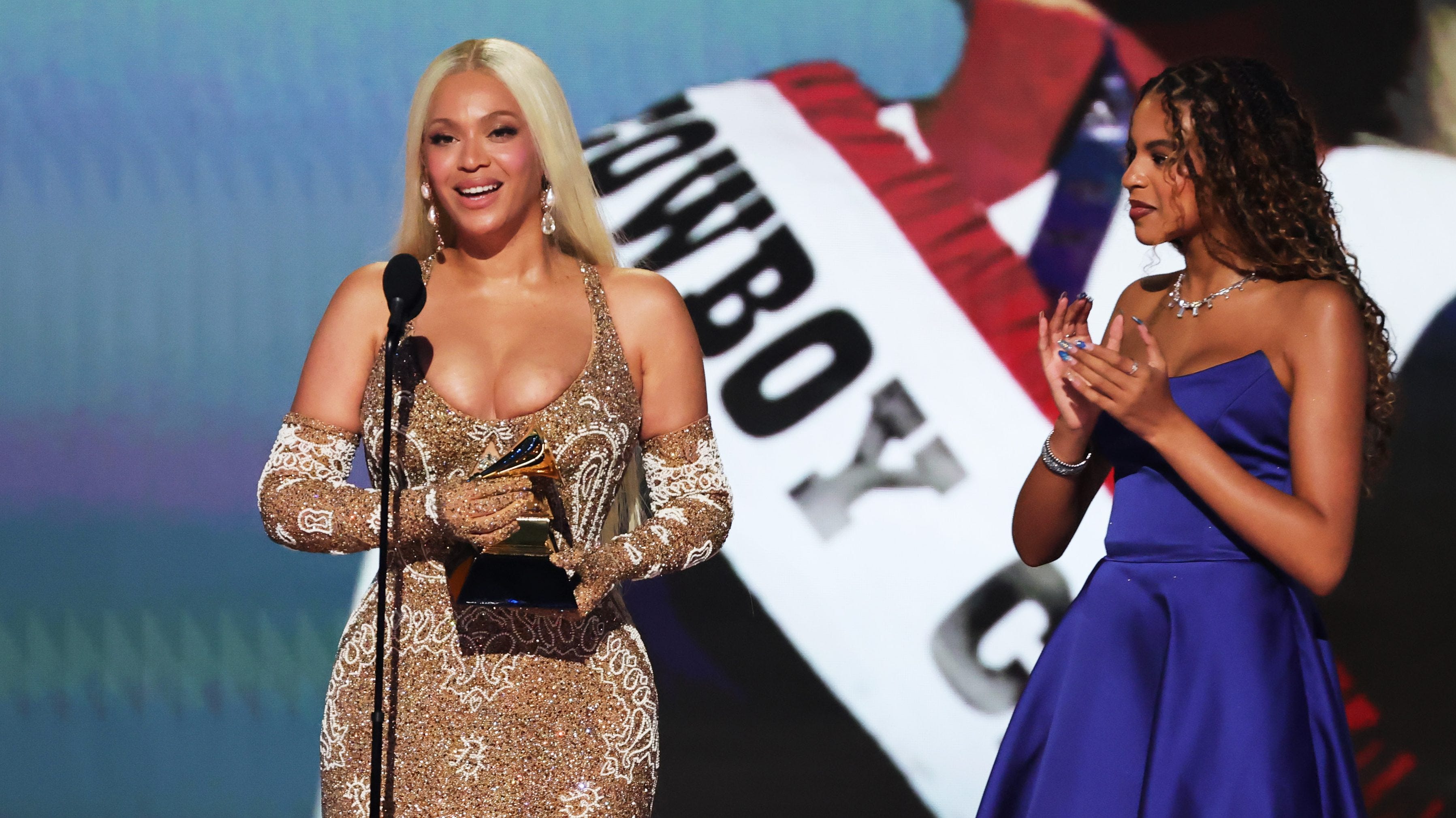
Drake had made the same complaint in 2017, after Hotline Bling won two rap awards: “I’m a black artist, I’m apparently a rapper, even though Hotline Bling is not a rap song.” Frank Ocean refused to enter Blonde in 2016, calling it his “Colin Kaepernick moment” and flagging the Grammys’ historical failure to recognise black artists as an explanation for his decision. Jay-Z, on stage in February 2024 collecting a global impact award, noted that the artist with more Grammys than anyone alive had never won Album of the Year. Beyoncé finally got it in February 2025 for her country album Cowboy Carter.
(Ed’s note: the Grammys started in 1959. The first black artist to win Album of the Year was Stevie Wonder, in 1974, for Innervisions. Across 67 years of Grammy Awards, only 12 black artists have won Album of the Year. Here is the list. And if you’re wondering, Aretha Franklin isn’t on the list. Her 1967 album I Never Loved A Man The Way I Love You, which is widely regarded as one of the greatest R&B albums ever, didn’t even crack it for a nomination. Yep, disgraceful.)
So, when Mason explains that artists are welcome to enter two categories, he’s not actually addressing the elephant in the room: an artist can enter multiple categories but it’s the screening committee of “genre experts” who decide whether the choice stands and can move a recording into another genre entirely. The rulebook reserves the Academy’s right “to place any selection into the Category it deems appropriate”. There’s no appeal system written into it anywhere. That’s the thing a decade of artists have been complaining about.
The statement is written in the American register of institutional contrition: sincere, first person, a gentle whisper of legalese. But it’s being read by a Korean industry and a global fandom with their own ideas about what accountability sounds like. Not to mention “Asia Pop” kind of glosses over the fact that the Asian region itself comprises a geographical region of intensely culturally diverse nations. We went through that a few weeks ago in Sumimasen.
The Grammys’ statement in isolation wasn’t bad and it may be factually correct that an artist can appear in multiple categories, but the fact of the matter is there just hasn’t been enough evidence of that actually happening.
In fairness, Neil went into the rulebook to prove the internet wrong and came back with plenty to prove the Grammys don’t always operate on a modus of cultural segmentation. Best Música Mexicana Album says in terms that “the musical style is determinative not the ethnicity of the performer(s)” and it was renamed for the 2024 awards after consultation with the Mexican music community. The Asian Pop rules carry the same line, with nationality added to it. On paper, this is a genre award like any other.
Then he found the language bar: the only one in the book that works as an exclusion rather than a way in. For Asia Pop, “recordings performed entirely in English are not eligible in this category”. That’s insane given the internal pressure on Korean artists to record in English over their native language in the interest of writing global hits. And that’s before we even get to KATSEYE, the HYBE and Geffen group comprising Filipino, Korean, Swiss and American members who are up for Best New Artist this year and for Best Pop Duo/Group Performance with Gabriela. This is the most deliberately global group built within the structure of the K-pop machine. It is also an act locked out of the Asian category. That doesn’t add up if this is a genre award rather than a racial or geographic fence.
Kindling aside, there was an easier way this particular instance could have been managed smarter: by understanding that if you’re representing a particular community, you actually have that community on board before you take it broader. Mason said the category had been “advanced by our Recording Academy members”, that “our members and Trustees felt this was the right moment”. Between then and 29 July, not one named artist, label executive or Asian industry body said a public word in favour of it.
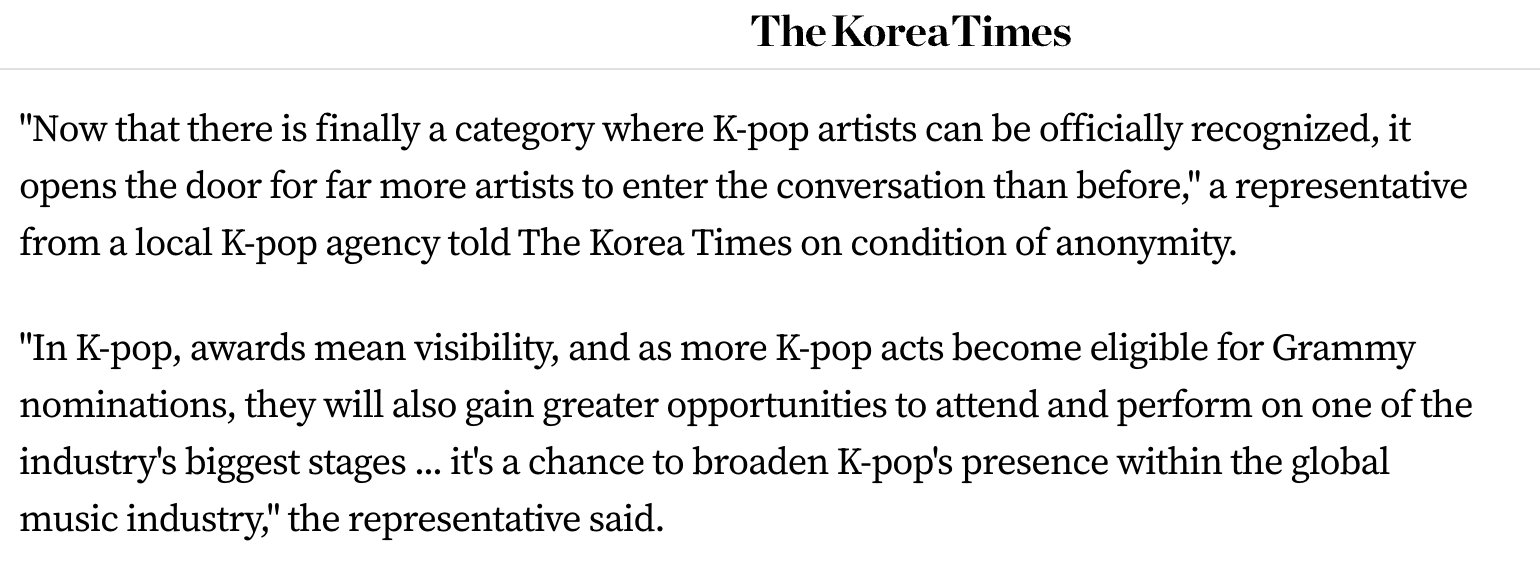
The Korea Times went looking two days after the announcement and got a supportive quote from a K-pop agency, anonymously. Nothing from HYBE, SM, JYP or YG. Nothing from any Japanese or Chinese label. Nothing from Gold House, which runs the Gold Music Alliance with the Academy itself, or from Jonathan Yip: the Grammy-winning producer and sitting Academy Trustee who fronts that work. The Academy’s Asian and Pacific Islander membership has doubled since 2019. Sixteen K-pop artists joined its 2025 member class. None of them said a word.
Whoever the Academy talked to, nobody surfaced to say so. This is not good. The Global Music rename came with extensive conversations with artists, ethnomusicologists and linguists; Música Mexicana came with consultation with the Mexican music community. This one arrived with an anonymous “well done” from an unnamed agency. If it was not obvious, that’s a very awkward thing to have happened.
We should be straight about what that industry consultation gets you, because it isn’t always as simple as picking up the phone and being gifted a hall pass. In the case of BTS, they appear to be objecting to the category existing at all – that likely would not have changed with a phone call in May – but it does mean the Academy has an idea of how to Act before it has to Explain and Amplify a turd: a different name, a Korean label quoted in the release, one artist willing to go on the record. You don’t consult to win the argument, rather you want to understand that when the “no” lands, somebody other than you is willing to explain why you went ahead… if you go ahead. Mason had nobody, so he did it himself, in his own name on the worst day available.
The gold standard here is ARIA and yeah we’re biased as we work with them. When the Australian hip hop and R&B community had things to say about how the awards were built, ARIA went and got them in the room. Chief executive Annabelle Herd put the method on the record in June 2023, alongside a rewrite of the entry criteria: ARIA had “stepped up that process to create further channels for open communication, conducting deeper consultation with leaders and artists particularly in emerging and evolving genres”. By January 2024, that had become a Hip Hop and RnB Advisory Group: 19 artists, managers, independent labels and a music journalist, co-chaired by ARIA’s head of policy and a Warner A&R. Hau Latukefu, Kween G, Naomi Wenitong, Nina Las Vegas, Sosefina Fuamoli. Genre leaders and tastemakers, named, in the building.
That breathes a different story: an industry representative is only as good as the industry it collaborates with. In the absence of that collaboration, you’re torched. The shame of it is that making the effort to consult in this way can be unglamorous enough that most organisations never bother.
There was no version of last week’s events that worked in the Grammys’ favour, not by that point anyway. The statement is the correct output, but for a bad decision in the first place. It was written by the last person left holding it, to an audience that made its mind up in June based on 10 years of reasons to distrust what was being said. Now maybe, just maybe, the idea for an Asia Pop award genuinely came from a good place. We’re inclined to believe it actually did; the Grammys organisation has also done countless incredible things for the industry and is full of very smart people. Unfortunately, it just didn’t read the room on this one.
Our advice? Read the room. Understand what path you have walked before you have to talk your way out of something without the evidence to back it up. This was an over-exposed and sensitive issue for the Grammys as it was, it should have come with extra due diligence accordingly. That due diligence involves picking up the phone: you can’t retcon the past but you can get a better gauge on the future. Let people tell you “no” in private, a year before you need them saying “yes” in public. Otherwise seven people with hundreds of millions on speed dial can really ruin your morning. And even if you write the best statement of your career by that afternoon, you’re still facing the ARMY firing squad.
What we’re obsessed with this week
Neil
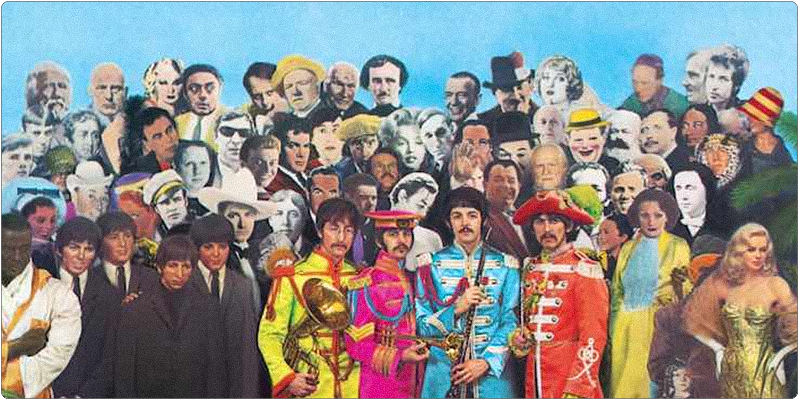
The talk above about Aretha Franklin’s classic album sent me searching for who won the Grammy for Album of the Year that year. It was the Beatles’ Sgt. Pepper’s Lonely Hearts Club Band. Thirty nine minutes and 36 seconds of sheer genius and the best album cover ever (prove me wrong). That’s my obsession for the week ahead. A 59-year-old piece of art that changed an industry. Sgt. Pepper’s turns 60 on 26 May next year. If there isn’t a new collector’s edition, a new TV special and a four-week festival (there was a three-week one for the 50th anniversary), I’ll be seriously pissed off.
Eliza
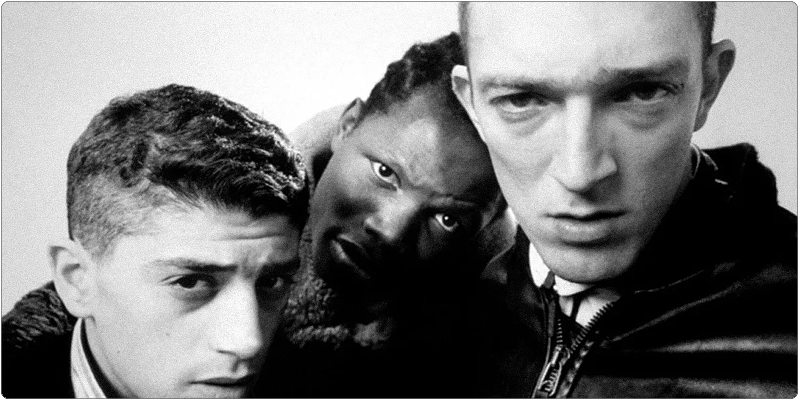
I recently watched La Haine directed by Mathieu Kassovitz and it definitely lived up to the hype. Sitting in my Letterboxd watch list for close to a year, I kept missing my chances to watch it. Missing every movie screening, every special event, I even bought a subscription to Mubi only to be led astray by Google’s AI search. Until Apple finally added it to their store for $3.99. La Haine is a social thriller based in Paris in 1995 during police brutality protests. The film follows three boys — Vinz, Hubert and Saïd — wandering the Parisian suburbs over 24 hours after a violent riot that led to the shooting of Abdel Ichacha. Each friend represents a different ethnic and cultural background and a contrasting reaction to systemic marginalisation. Sounds tiresome, but it was completely captivating. Its raw realism, striking black-and-white cinematography and fluid tracking shots created a tense, real-time countdown structure that only heightens the narrative urgency. 5/5 stars.
Tess
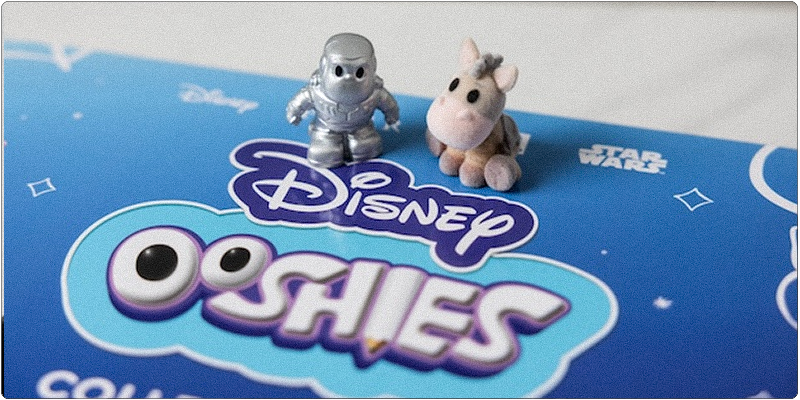
This week’s obsession? Well... technically it’s my son’s. But as the responsible adult in the room, I’ve somehow become just as invested in the great Woolworths Ooshies hunt.
I’ve also become slightly obsessed with reading all the LinkedIn commentary analysing the marketing genius behind the campaign. We spend so much time talking about how hard it is to genuinely change consumer behaviour, yet the Ooshies seem to be achieving just that, because I don’t think I’ve ever spent so much money at Woolworths (we are a big shop at ALDI, small shop at Coles family), yet those little collectible things (what even are they?) have completely changed our shopping habits — at least for a few weeks until they all end up in landfill and I end up back at ALDI.
My son is now just three Ooshies away from completing the full set of 40, so naturally this feels like everyone’s problem now. If anyone has Mike Wazowski (Monsters, Inc.), Lightning McQueen (Cars) or Scorpion (Marvel) sitting in a drawer, holla at me.
Sam
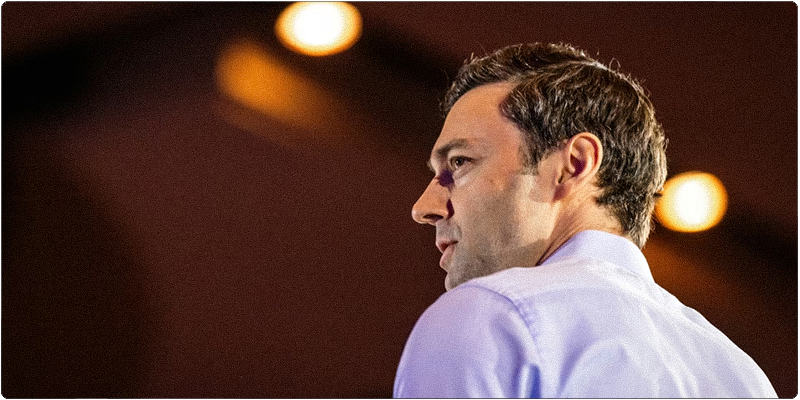
Sorry guys, but it's still Jon Ossoff. Last week's obsession sent me down a Ossoff rabbit hole and I ended up listening to his recent appearance on The Bulwark Daily podcast, which is worth your time regardless of where you sit politically. He covers the Supreme Court narrowing the Voting Rights Act, the DOJ hanging a giant banner of the president from its building ("like some totalitarian farce") and the Iran conflict, which he calls "strategic and geopolitical malpractice". He describes the current administration's power grab as "ham fistedly executed" and labels the whole thing "Banana Republic stuff." Once again, just more cracking lines from him, delivered in his plain, serious, low, tones. What makes it compelling from a comms perspective is that fact… Ossoff never raises his voice or reaches for a soundbite. His matter-of-fact tone cuts through clearly. And it’s resonating; I haven’t been this interested in someone politically since Obama. In a time when everyone is shouting at the media and at podcasts and into the void, it’s quite a disruptive thing to just speak quietly and confidently.
Andrew
My friend Rory’s recently started a podcast, Those Who Build, drawing on his own friends in the start-up community who – at least from the eps I’ve listened to – are at the absolute bleeding edge of where consumer tech is heading. The guest list is stacked, the stories are crazy, and listening to much of this content has begun to border on masochism as I begin to feel like I’m running at quarter capacity.
Having said that, I finished the latest episode this morning featuring Chris Josephs from Autopilot. It’s my favourite so far. I won’t spoil it for you, but a business this fundamentally game changing for personal finance stemming from a meme speaks volumes for the way marketing and product – which, yes, have always worked hand in hand – has evolved for the modern social landscape. Also the Inverse Cramer Index is one of the funniest things I’ve heard this year.